Dreaming In Italian


Bologna Miscellanea

Friday, October 14th, 2011

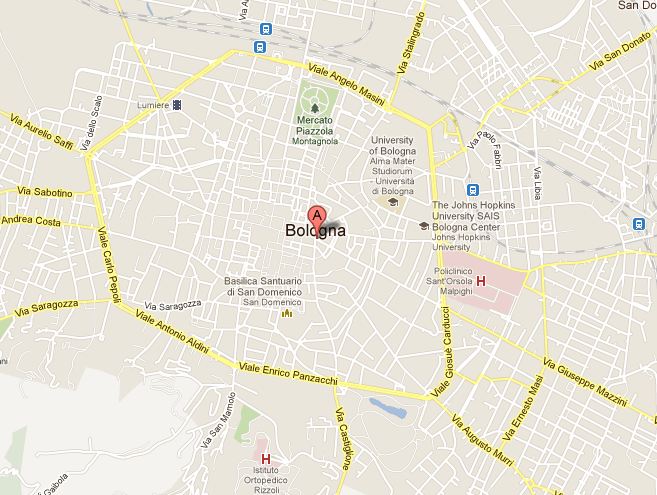
I’ve now been in Bologna for 5 weeks and continue to enjoy the city. I’m sure that I’m not risking a flood of American tourists suddenly appearing here by recommending this city as one of the prime destinations when visiting Italy. Sure, Florence has great art. It’s worth a visit but you must navigate the hordes of tourists emerging from the parking area full of a hundred buses. Naturally the prices are high in such an environment. Now on to the second of the big three, Venice. Again, definitely worth a visit. Take a vaporetto (like a bus on water) down the grand canal and marvel at the beauty of the palazzi. Go to Piazza San Marco and take in the beauty (and be assaulted by the pigeons). Wander around a bit in a town with more tourists than residents. Next onto the last of the big three – Rome. I prefer it to the other two since it is large enough, like New York, to absorb a lot of tourists without seeming overrun. If you venture outside the very center it’s a “muscular” city that feels very Italian. It has tons of history on practically every corner and I like it a lot. However for me the real Italy always seems to be elsewhere – in smaller cities and towns. I’ve found Bologna to be just about perfect. It’s neither too big nor too small. In terms of population it’s almost exactly as the same as the city where I live – Oakland. It’s smaller in area of course as Italian cities generally are. When you take a look at a map you can see kind of an egg shaped area which once was enclosed by walls. Most of the walls no longer exist but the 12 gates to the city have been largely retained. The roads through these ports converge in the center of the city near the Due Torre (two towers) that are a symbol of the city.  From the southern side (which I like the most) it is just about a mile walk from Porta Maggiore along one of my favorite streets, Strada Maggiore. It’s a magnificent city and I think that you will like it. It was founded 189 BC and has the oldest university in Europe (and possibly the world) founded in 1088. So Bolgona U. was founded over 500 years BEFORE the first American colony was established.

So now a variety of semi-random photos around Bologna. Don’t forget that you can click on any photo to see them in a larger size. Sometimes they appear cropped in the post and you see more when you click on them

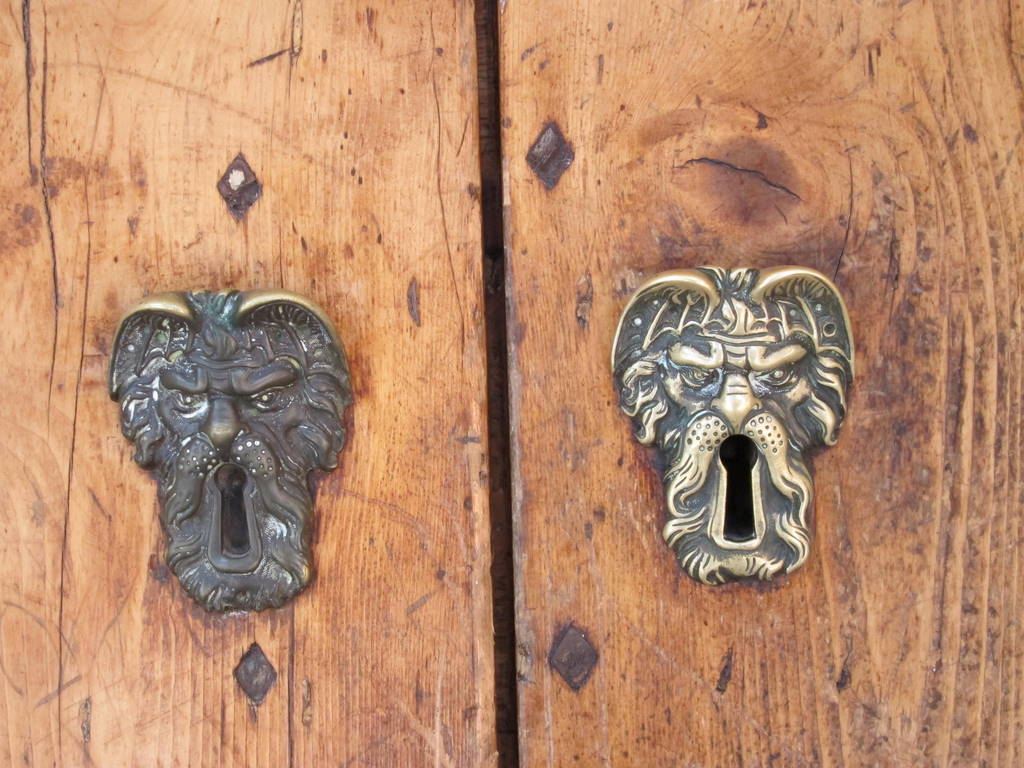
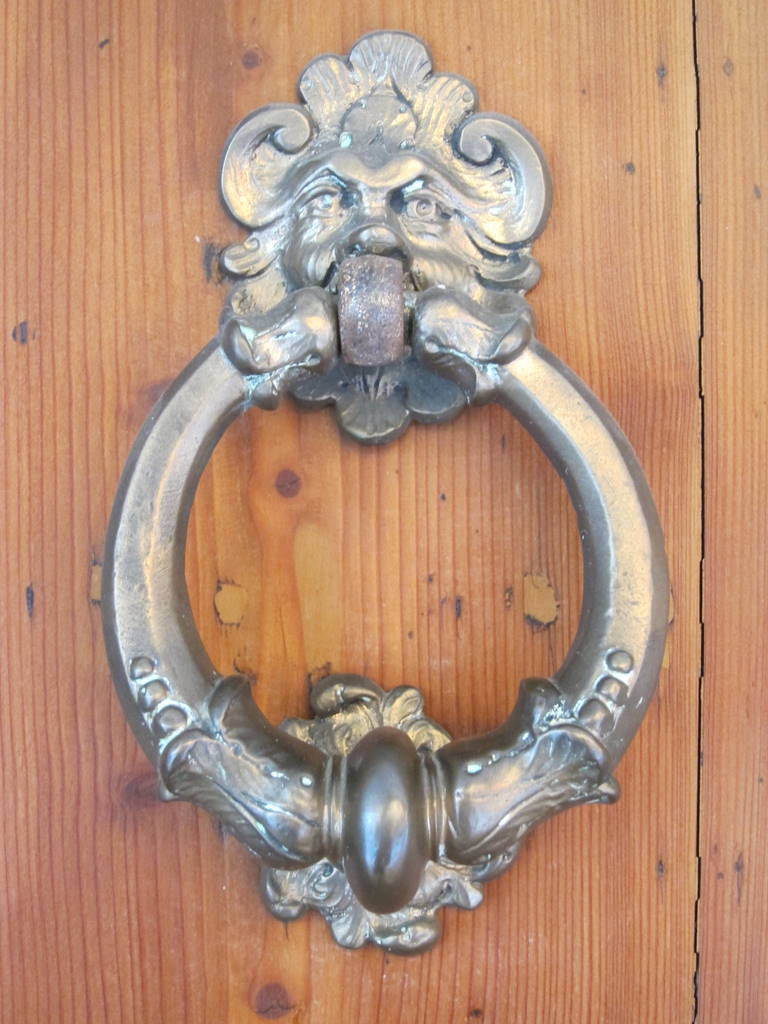
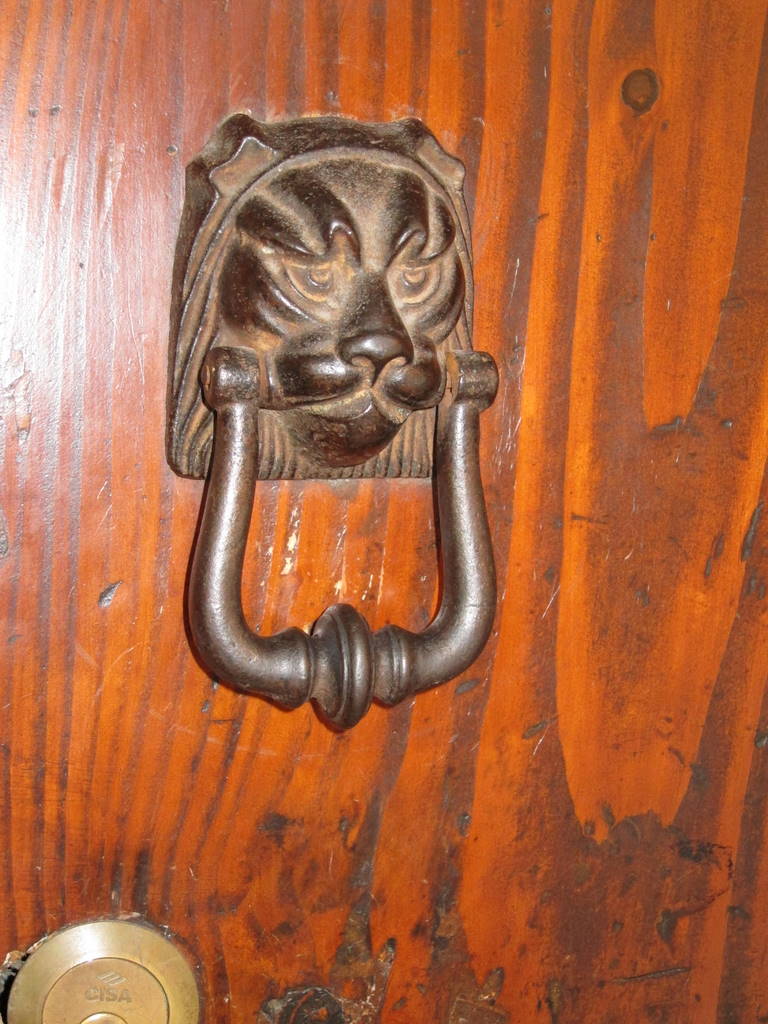
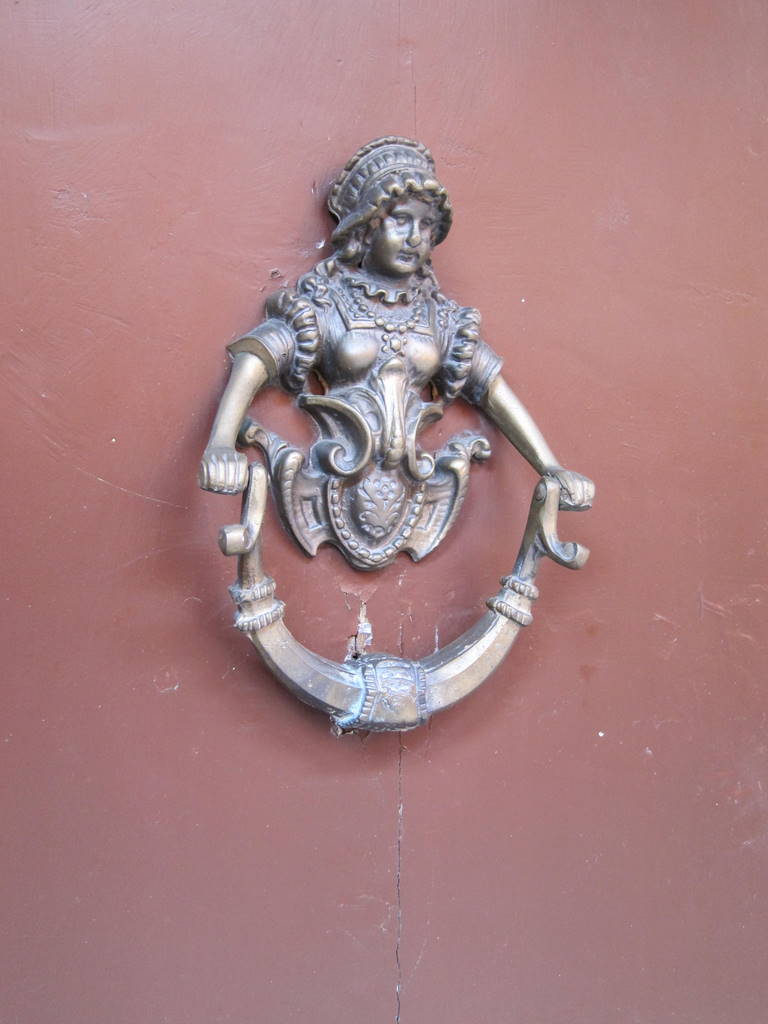
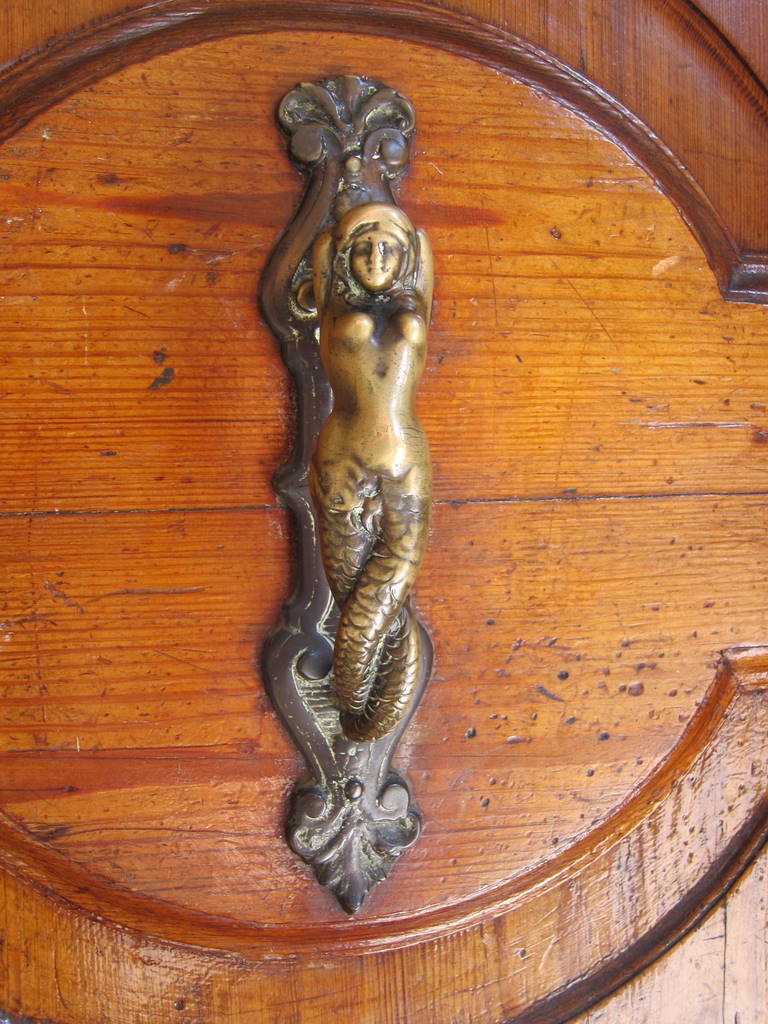
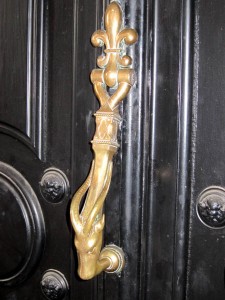
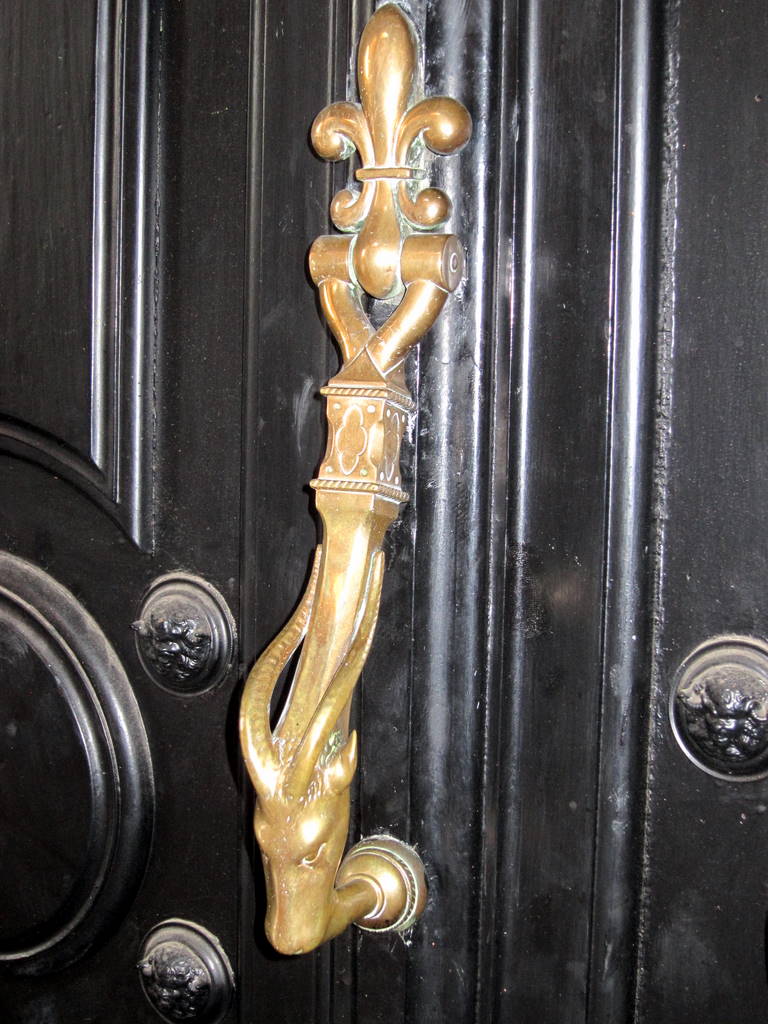
One day I took note of an interesting door lock door. The doors are pretty plain but  the locks, handles  and knockers often are not so…..

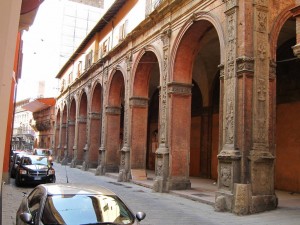
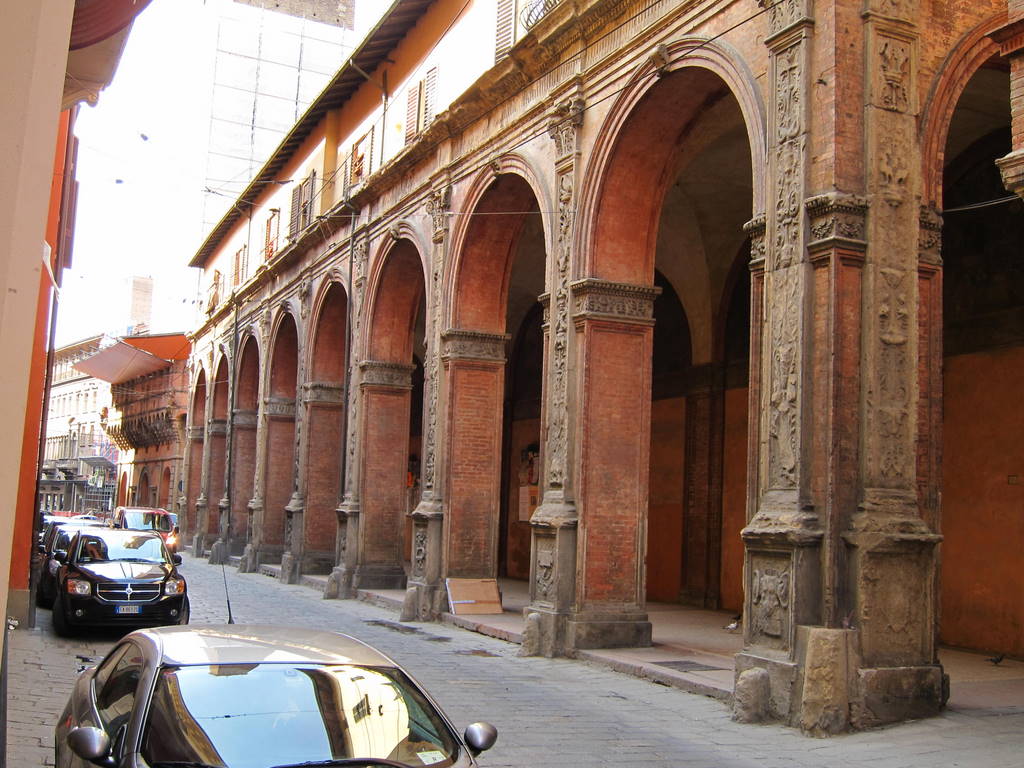
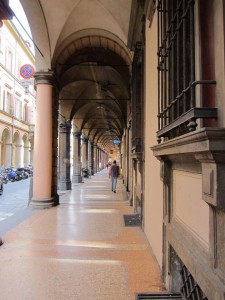
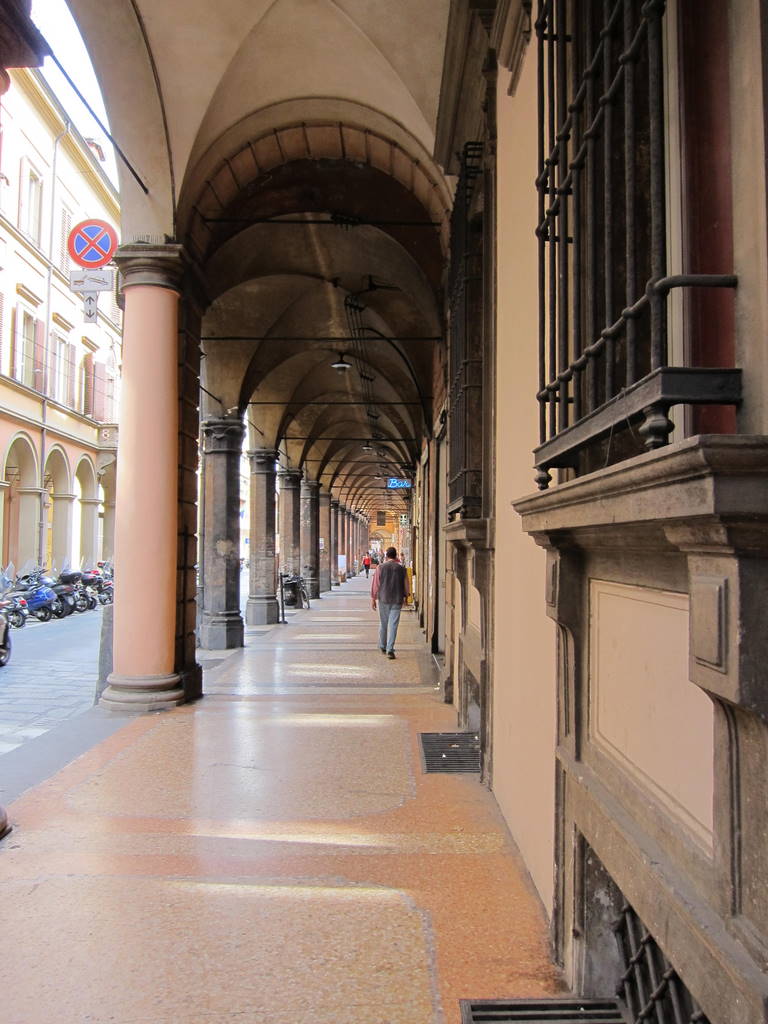
Of course Bologna is famous for it’s porticos. On the introductory tour of the city on my first day at school the teacher conducting the tour talked about the origin of the porticos. As the city grew space became short and some enterprising property owner had the bright idea of extending the building outward over the sidewalk to provide more living space. The first photo is one of the earliest that clearly shows these origins. It became such a popular idea that within the walls there are over 38 kilometers of them. Unless it’s really raining hard you don’t really need an umbrella – just take a quick walk or sprint through the gaps in the porticos at intersections.

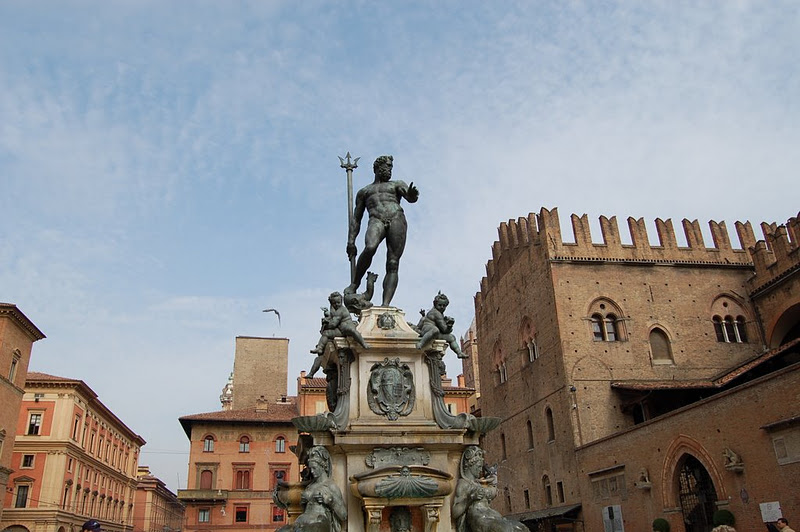
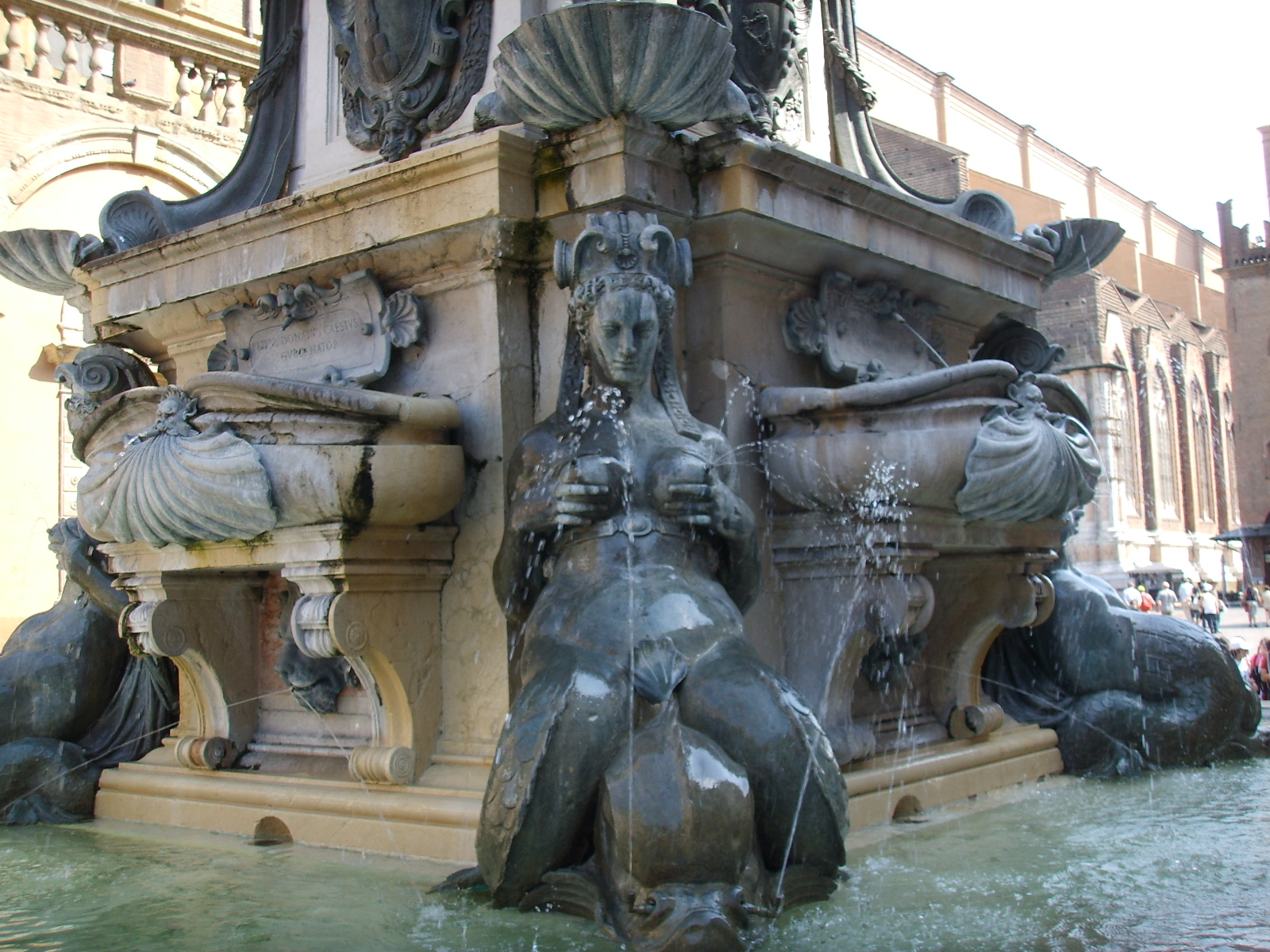
I thought that I had taken photos of the famous Fountain of Neptune in Piazza Nettuno but I can’t find them so a grabbed these from the web.
 

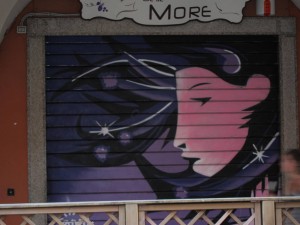
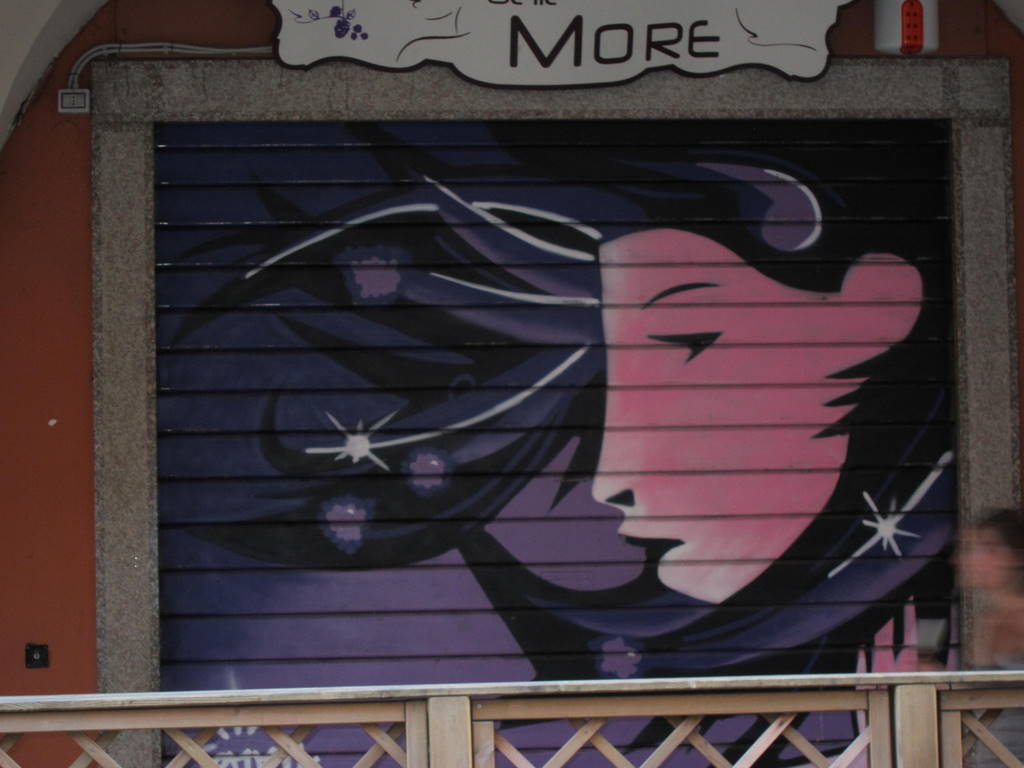
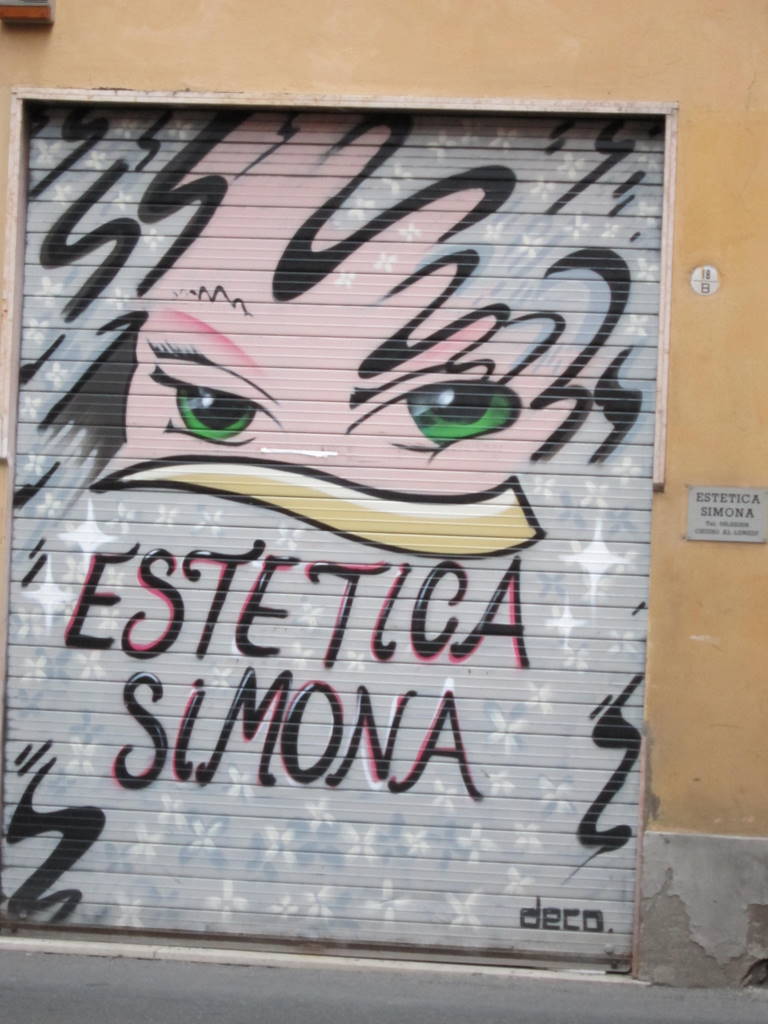
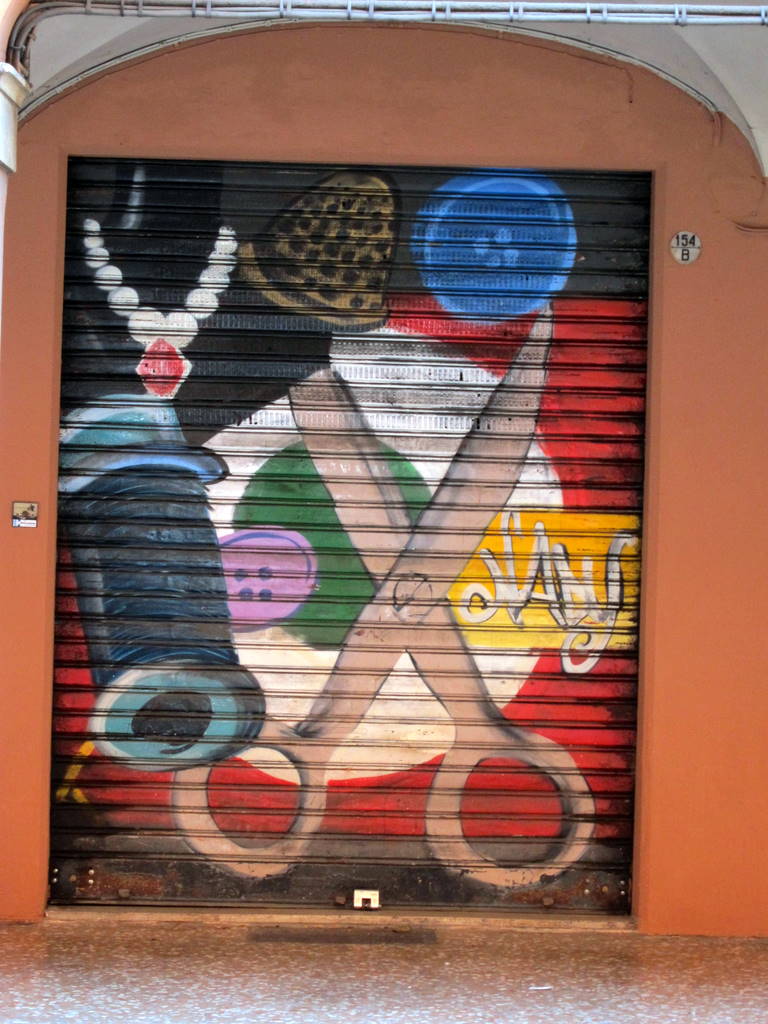
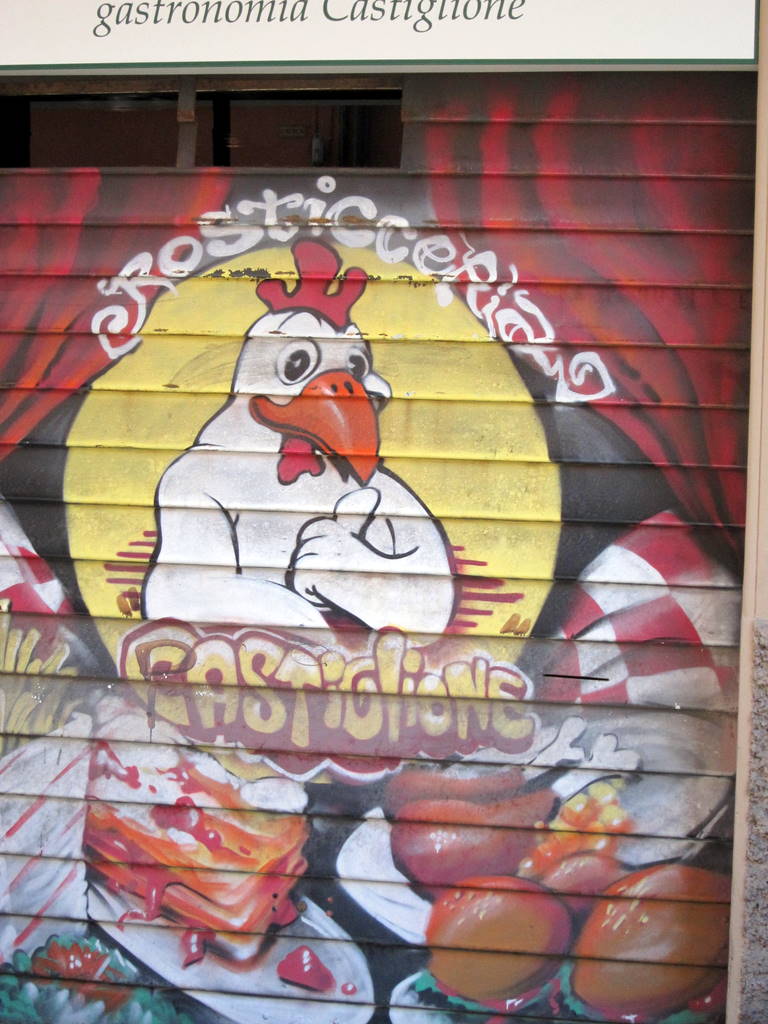
When the shop is closed and they roll down that door often they put that nice space to use for advertising.

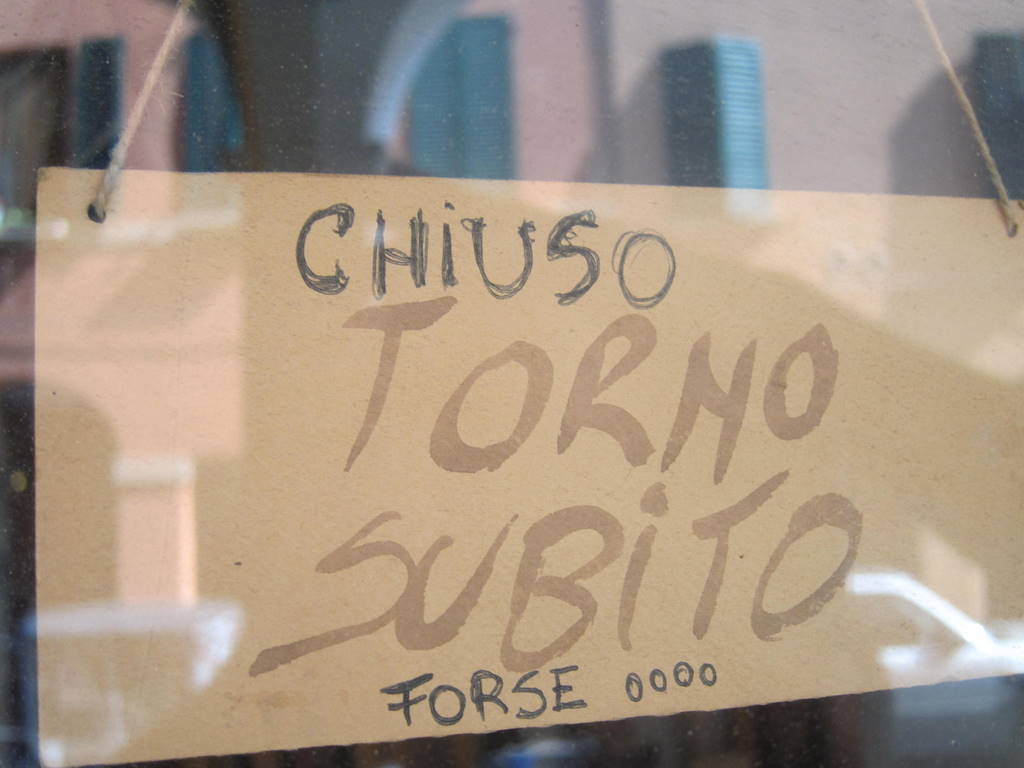
And finally, it is, after all Italy. You really should click on this one to see the entire sign since what you see is cropped.


Soccer Madness

Friday, October 7th, 2011

I really don’t know this game very well but the Italians are absolutely mad about soccer (calcio is the word here). They talk about it all the time, read about it, have daily newspapers largely devoted to it and even the women follow it regularly. I’ve watched it some here and indeed went to the stadium in Bologna to watch Bologna (next to last in their division ) get trashed by Inter, the Milan team (squadra) that is one of the better ones in Italy. Last night I watched the first half of a game (partita) between AC Milan and a Czech team on TV. The Bologna-Inter team was at best boring. It moved slowly and indeed it would have been an incredible upset had Bologna won. The Milan-Czech game had much more action and many moments of real excitement. Still it seems to me a curious game, especially compared to all of the other sports that I’m more familiar with. I think that the closest equivalent is hockey – which I don’t understand very well either. In most american sports one team or the other almost always controls the ball but not in soccer. Unlike american football which seems to be a game of maximum precision (as well as brutality) what strikes me the most about soccer is the sense of randomness about the game.The ball is kicked downfield and often kicked aloft again or two players rise to butt the ball with their heads to further lift it into the air. So it seems that the strategy is to generally control the ball as much as possible and keep it in the opponents area of the playing field to provide potential opportunities to score a goal. As I said, in a good game there can be a lot of action and tension in the game. Of course part of what leaves me scratching my head is that I don’t know the rules well. Why did they kick the ball from the corner? What happened to make that possible. It must be a really severe penalty that results in the one-to-one situation where a player faces only the goal keeper and can kick the ball into the goal. That is a really tough situation for the goal keeper because the ball goes fast and the goal is wide – probably almost always it results in a goal. I have no idea what happens to cause such a severe penalty.

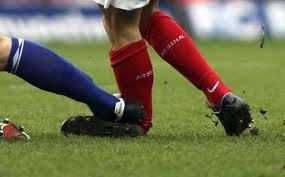
I am always quite impressed with the ability of the players to move the ball with only their feet. While football brutalizes the players generally there must be a lot of career ending knee and ankle injuries in soccer. Players are always starting and abruptly stopping and getting their legs tangles up with other players when moving the ball. There are also possibilities of being kicked accidentally during frantic attempts to gain possession of the ball. The photos below are examples. I found others that really made me cringe.


I can also see the appeal of the game as something available to everyone. After all the only thing that is really necessary to play the game is one thing – a ball. No gloves or bats or significant space in which to play like baseball. Certainly nothing like all of the equipment required for football. Probably basketball comes closes with a ball but also requires baskets which you don’t find everywhere. Here I see kids playing in almost any available space. There’s really no need for goals to practice the essential skills and the area required can be quite small.


And now for your viewing pleasure some highlights of a World Cup series of games

Ah, to be rich in Bologna

Tuesday, October 4th, 2011

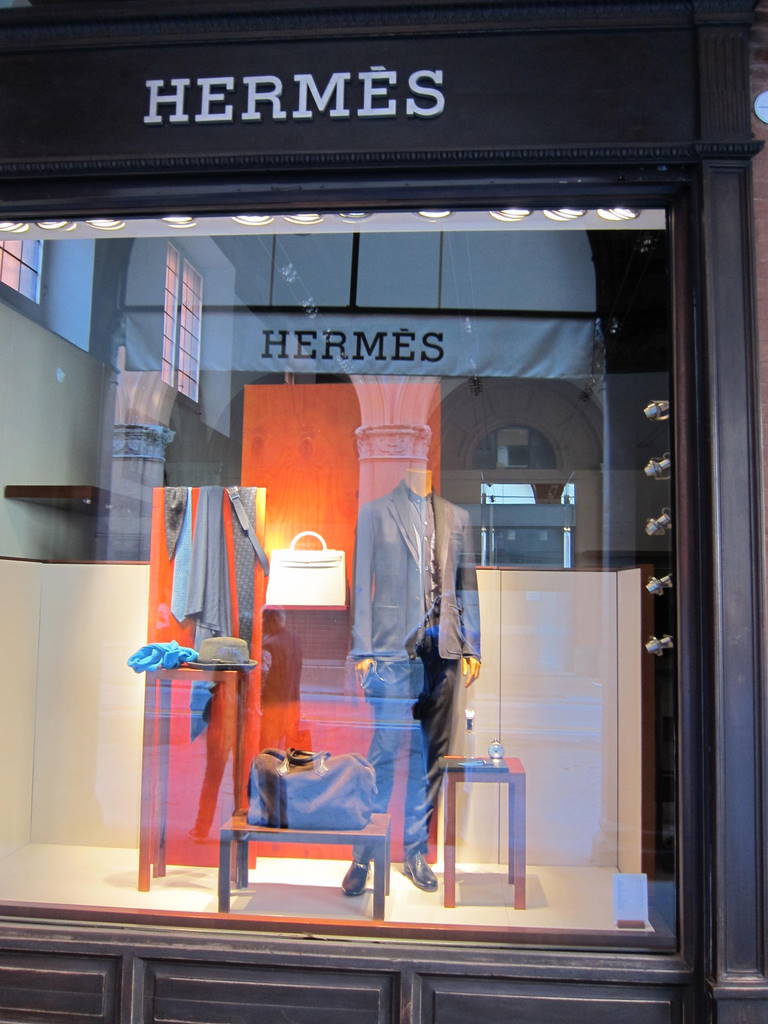
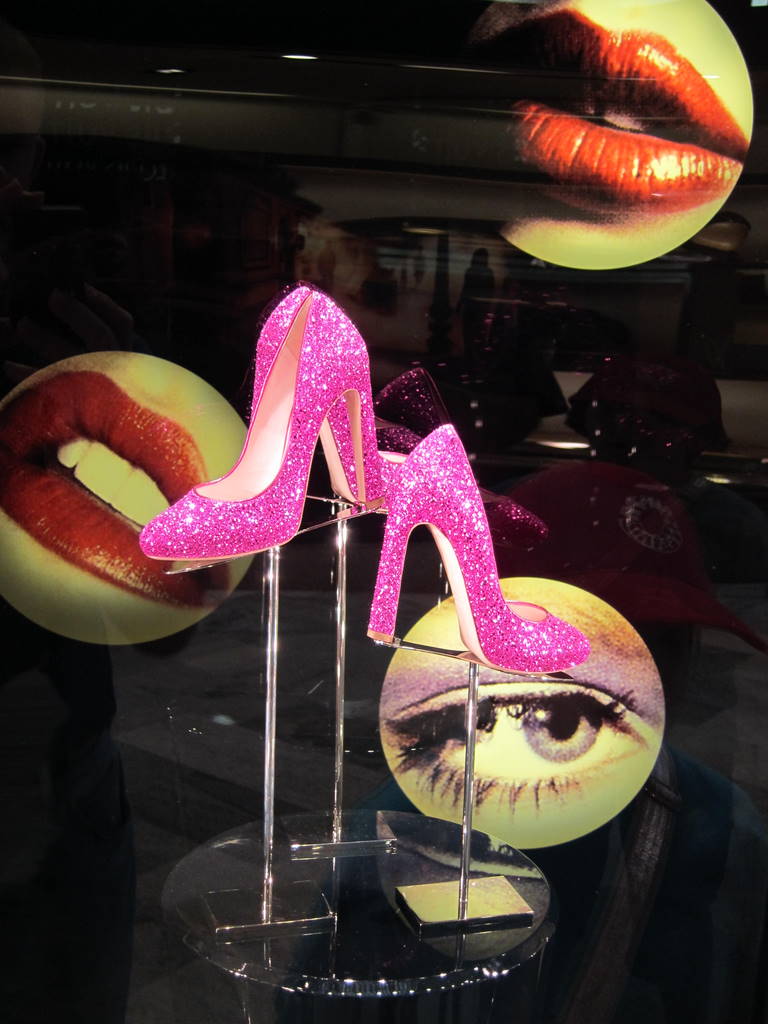
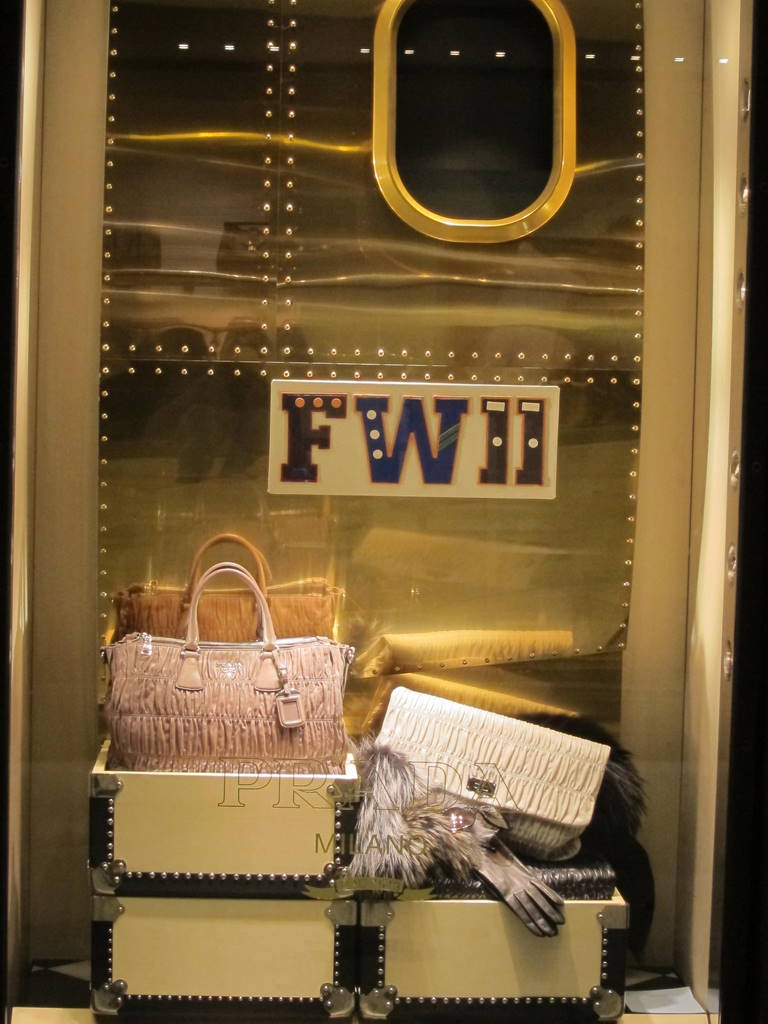
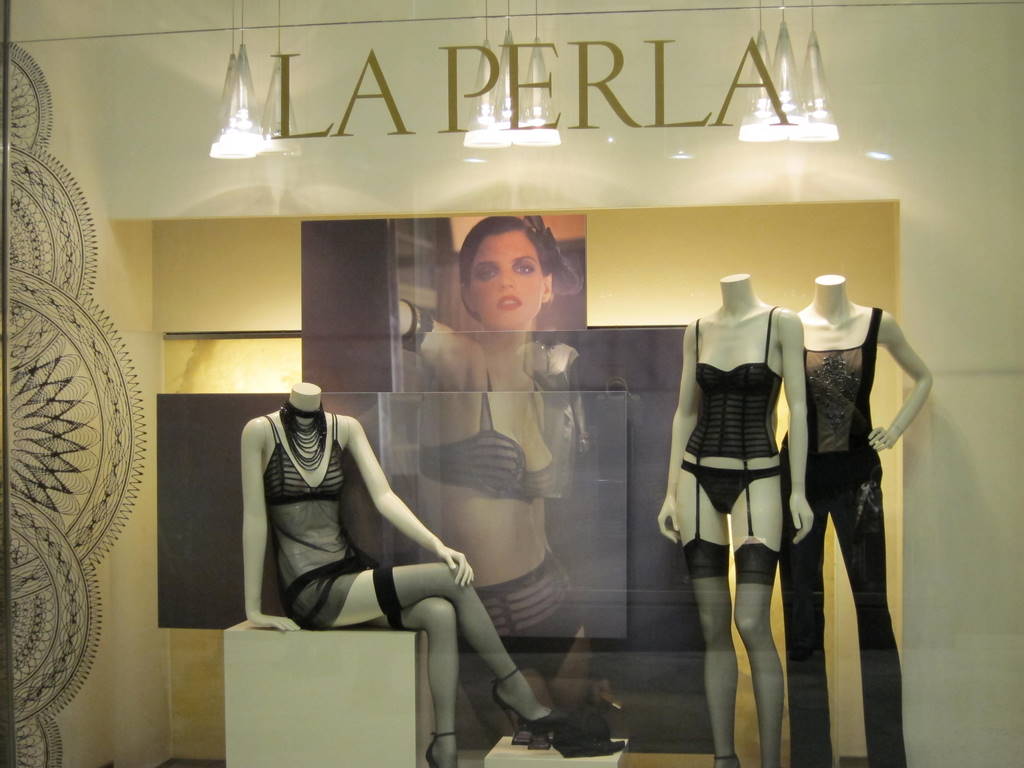
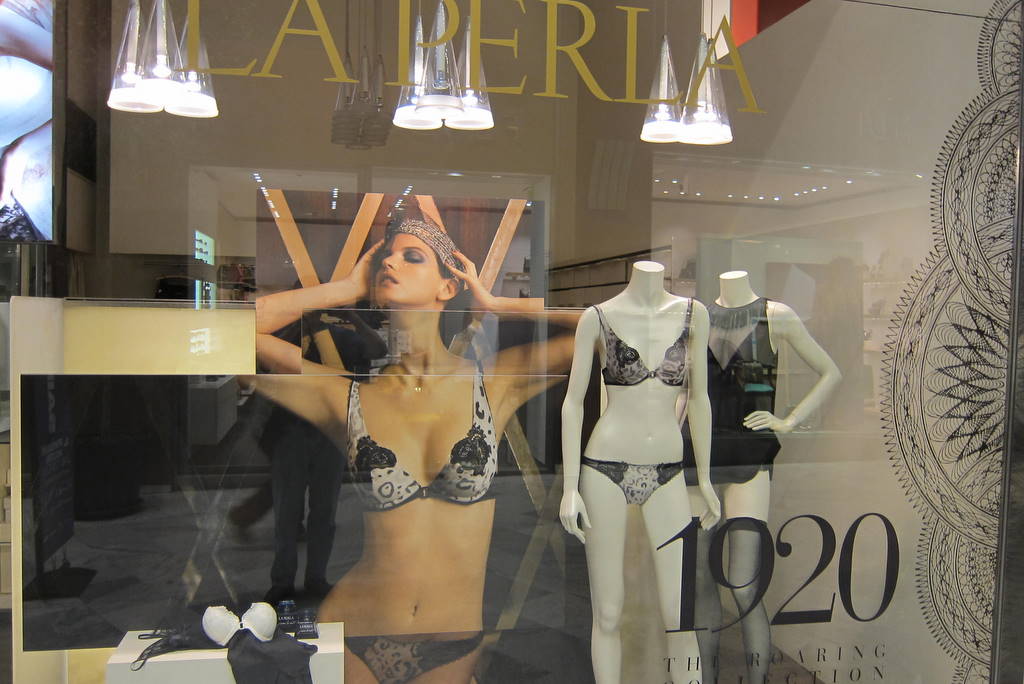
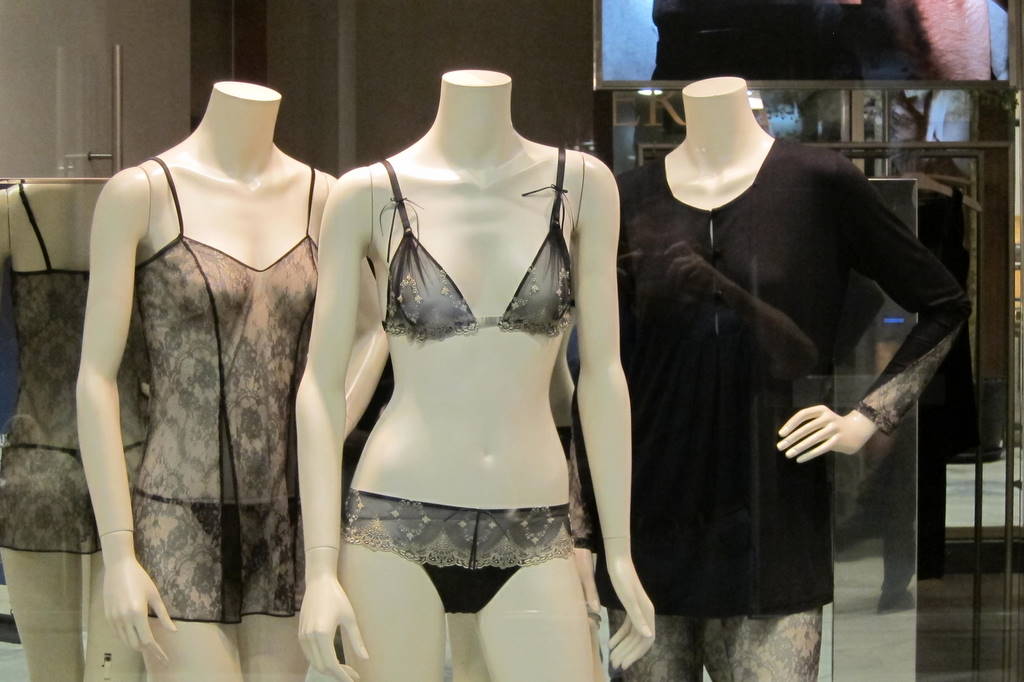
So maybe you just won the lottery, or maybe your last name is Agnelli (founder of Fiat) or perhaps you’re a woman chummy with Berlusconi. Of course you might be living in Turin, Milan or Rome. But perhaps you really like Bologna – after all there’s a lot to like. If you have money burning a hole in your pocket, where do you go? Well, I think that I have the answer. There’s no shortage of opportunities to lavish cash on overpriced items with a designer name. Just go to Piazza Minghetti and you can leave considerably poorer.

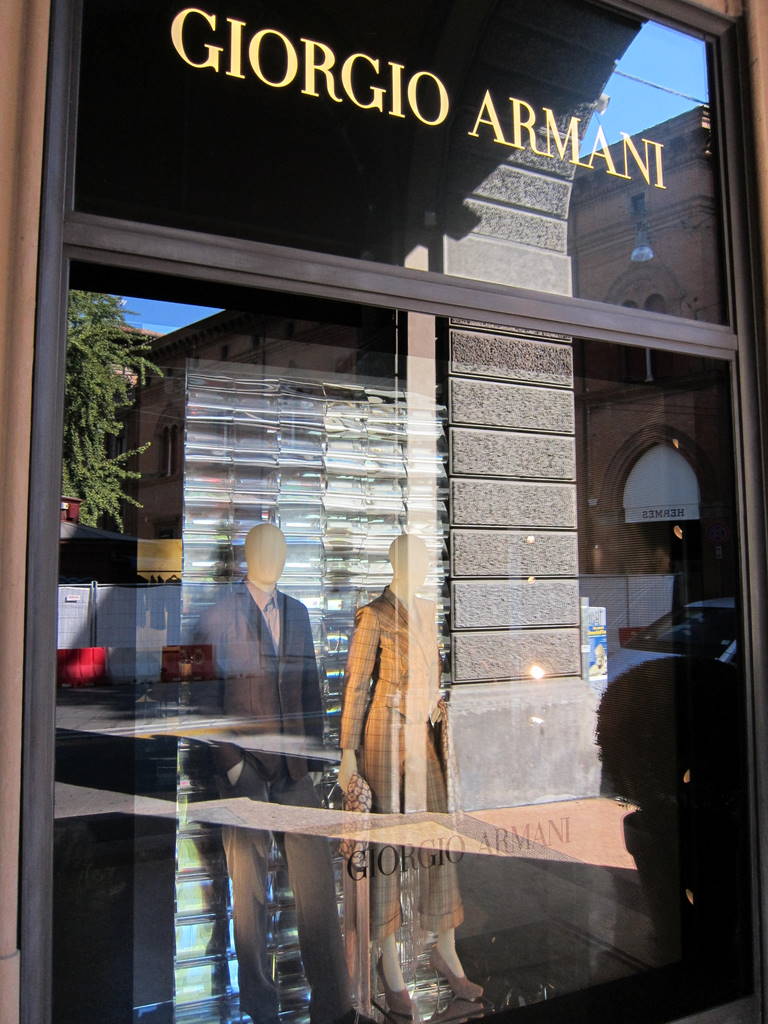
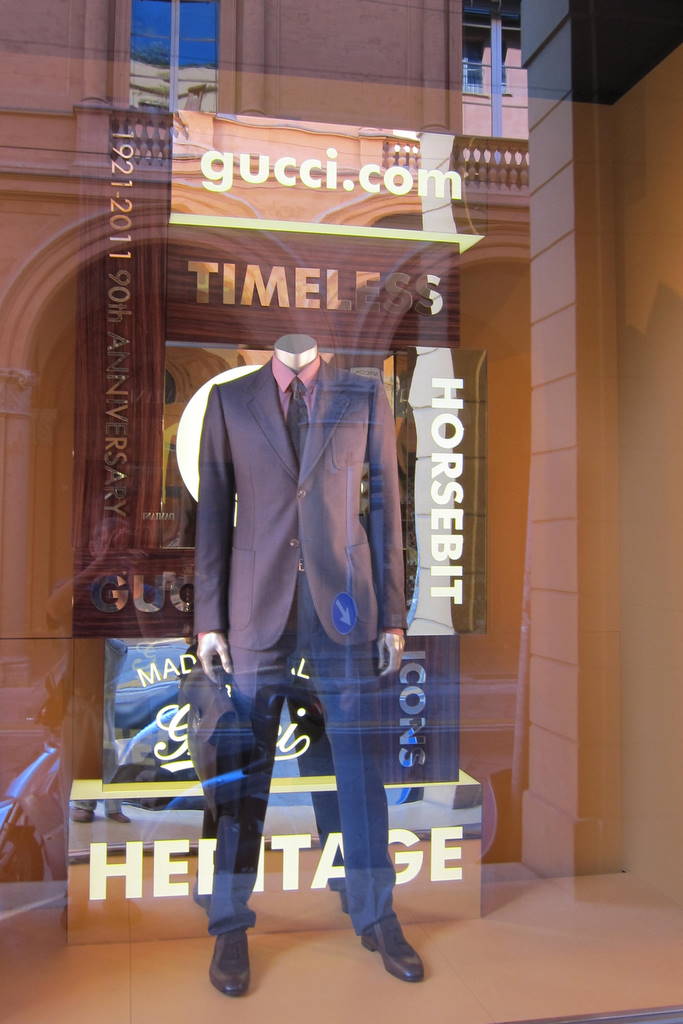
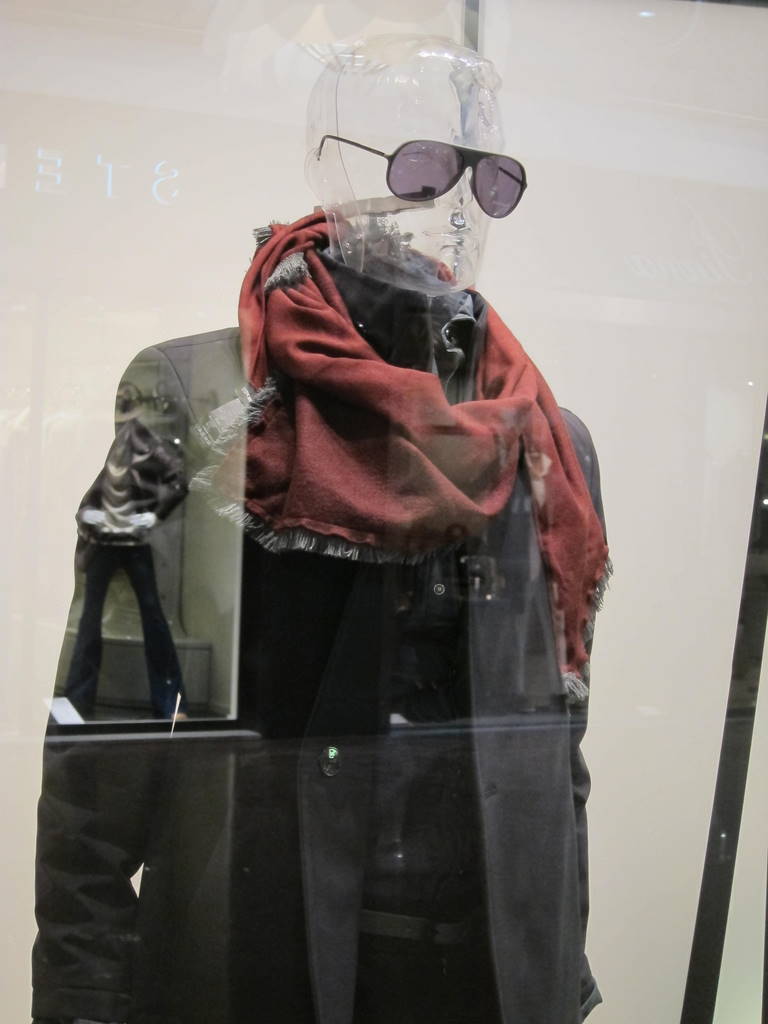
I had some time to walk around there while waiting to meet some people at the bus stop nearby. The first window that I looked into was Georgio Armani. Does anyone really need pants that cost 405 euros? I think not. But as long as you are in the mood the jacket goes for 2395 euros – that’s certain to impress your other rich friends. But wait, let’s move upscale a little bit. Across the street you find Gucci and Hermes where you can one-up your pals that settled for the 405 euro pants with those that go for 520 and 540 euros respectively. What is this, a contest to see who can price their stuff the highest? Of course the women are not to be outdone. The women’s pants in the Armani window go for 690 euros – women seem always to be charged more and what else to talk about during those boring afternoons at the spa? Of course you could opt for the jacket at a modest 1375 euros.

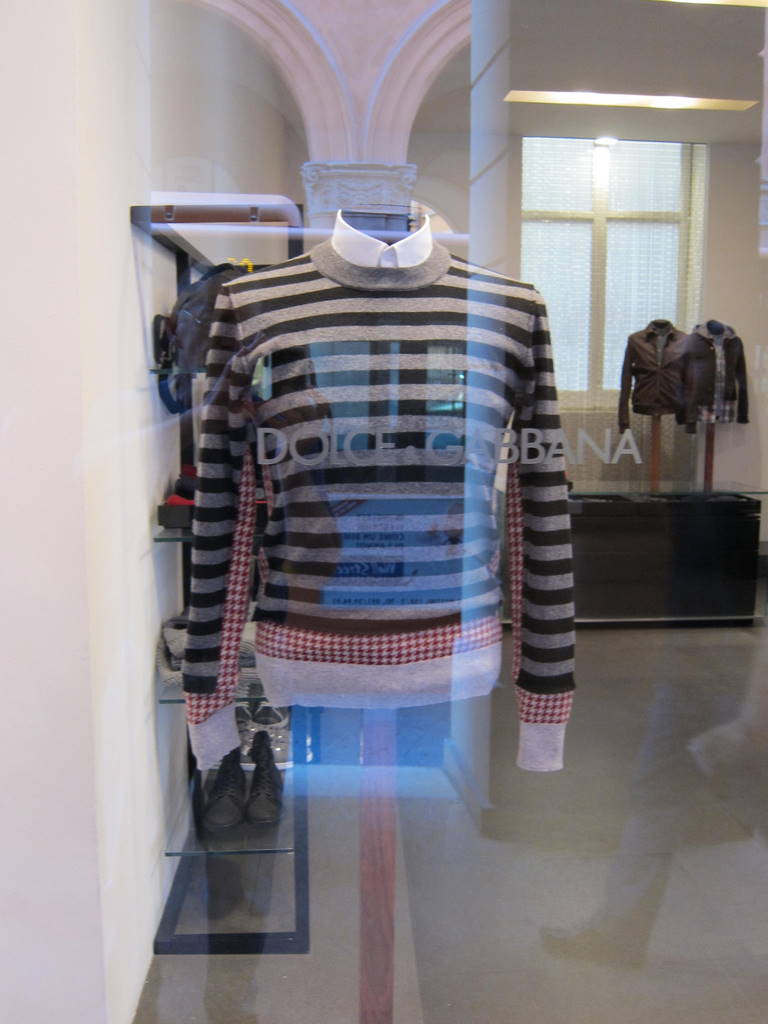
Want more? Well, I’ll tell you anyway. The relatively simple sweater at Dolce and Gabana goes for 375 euros. The shoes in the window of Miu Miu go for 395 euros. Of course for those that are on an economizing kick due to the slumping Italian economy you can always go to Emporio Armani (don’t breath a word about this) and pay only 200 euros for a pair of pants. Of course one must accessorize with a scarf that it seems that no respectable Italian would be without at almost any time of year with even a hint of chill in the air.

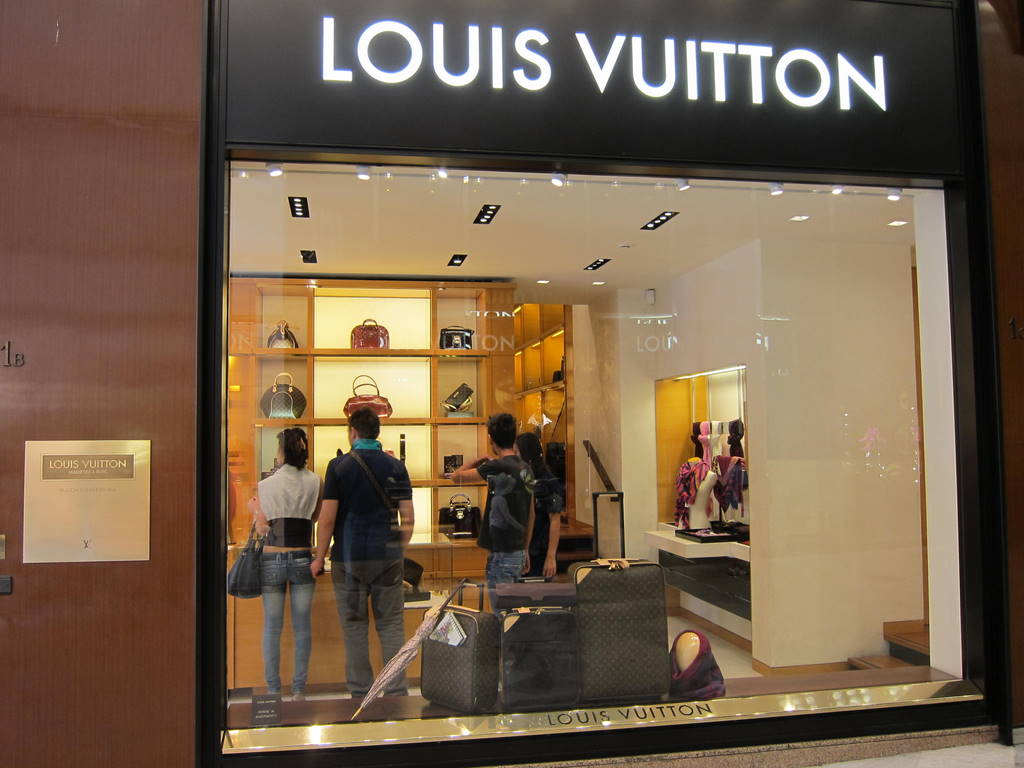
There are certainly riper opportunities to part with a “sacco di soldi” a pile of money. Louis Vuitton is there and don’t even post prices in the window as is usually the custom. As the saying about yachts goes, “ if you have to ask the price, you can’t afford it”. There are other clothing shops with vertiginous prices; Fendi, Burberry, Yves Saint Laurent and numberous high end Italian designer that I’m unfamiliar with. But to really eat into the bank account there are Bulgari and Tiffany as well. I did find a one shop that liked.


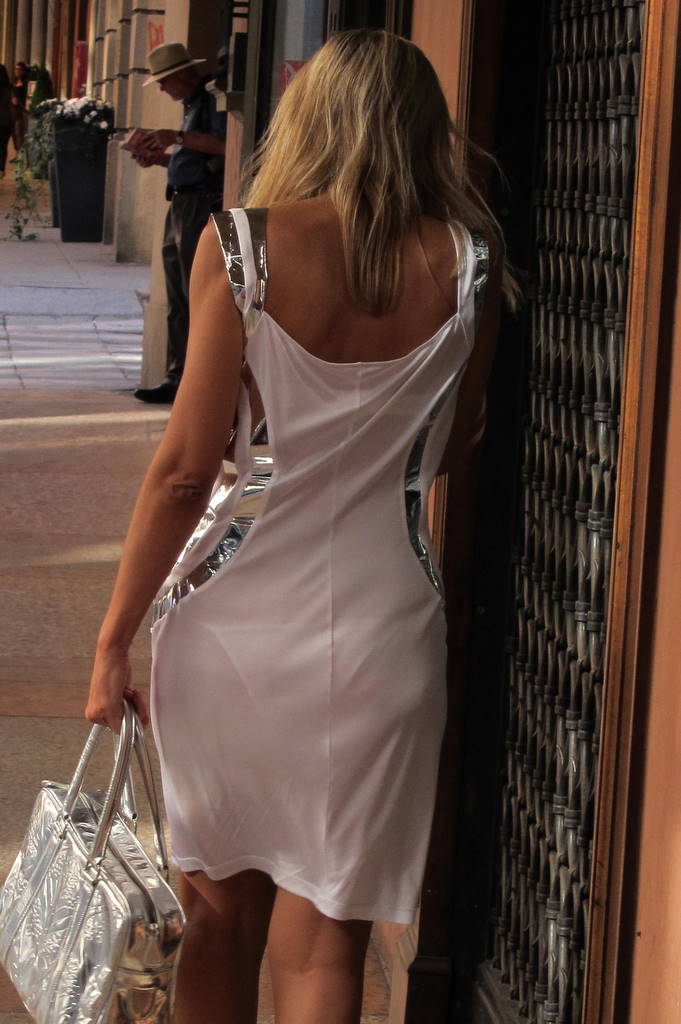
But who wears this stuff. Maybe this is one?

Comments anyone?

Ducati

Thursday, September 29th, 2011

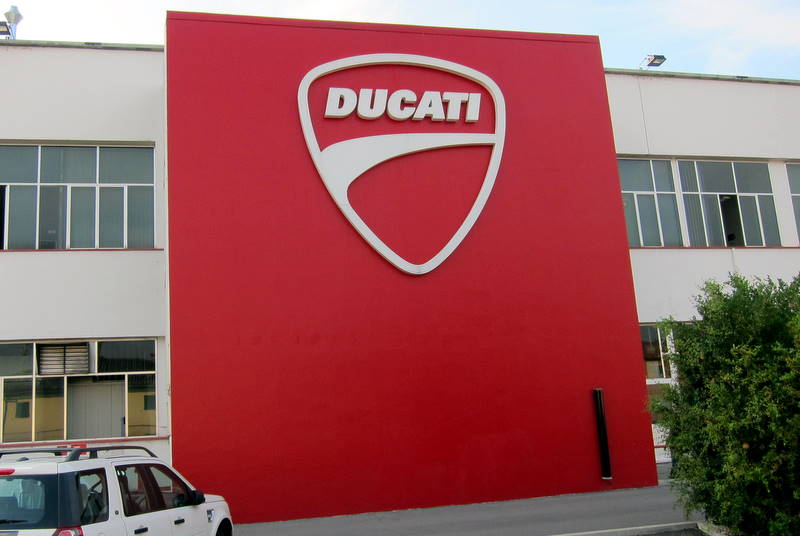
How could I go to Bologna and not visit Ducati? I had a Ducati many years ago and have quite a fondness for them.

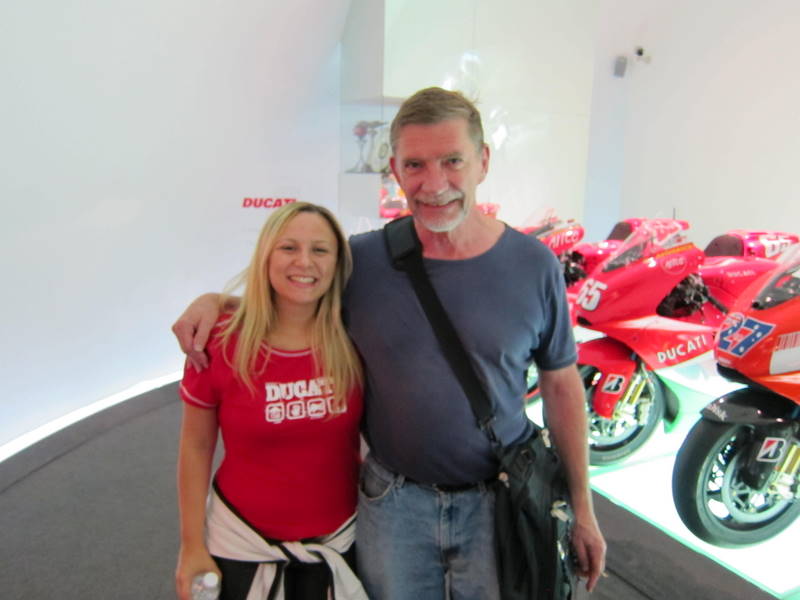
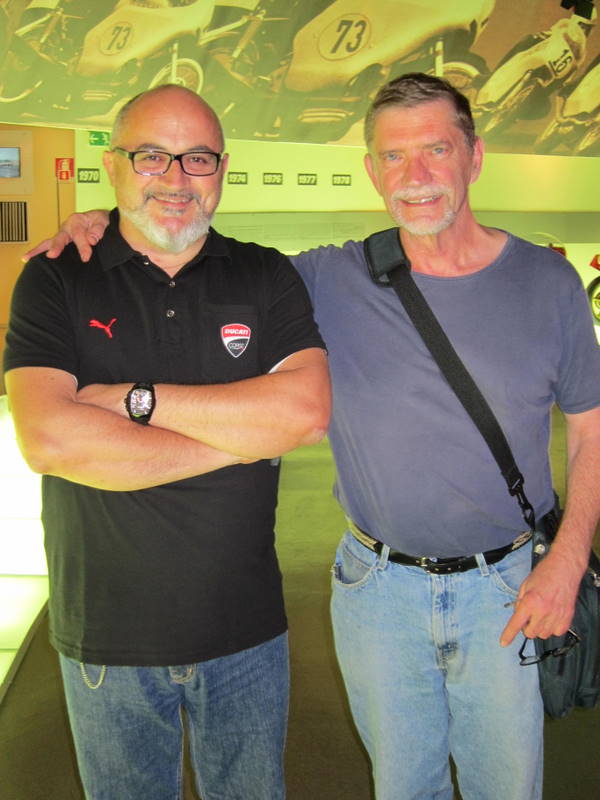
Not only that but the factory is in Borgo Panigali which is really a suburb but is officially part of Bologna. There is a bus that goes directly there – well, the stop is only 200 meters or so from the factory. In addition, Patrizia, in whose house I’m staying, knows Livio Lido, the director of the museum. I went with two other guys from the school one afternoon last week.

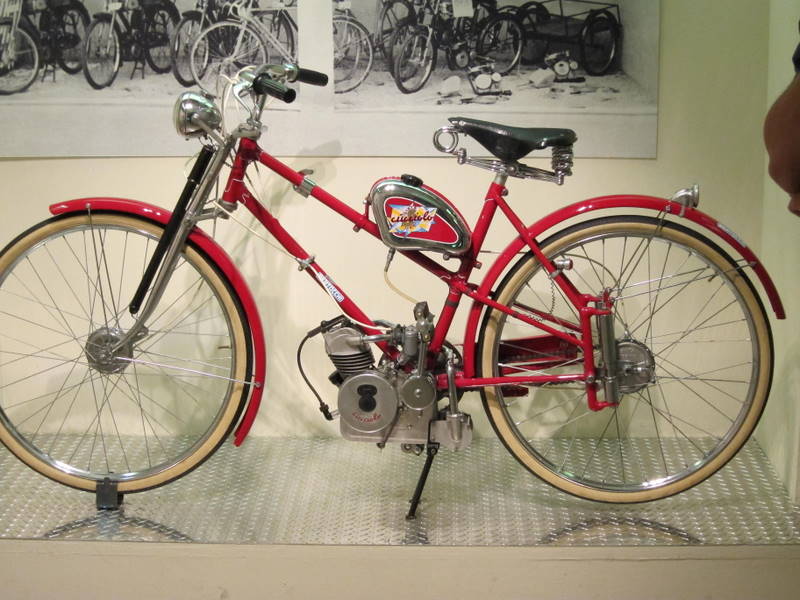
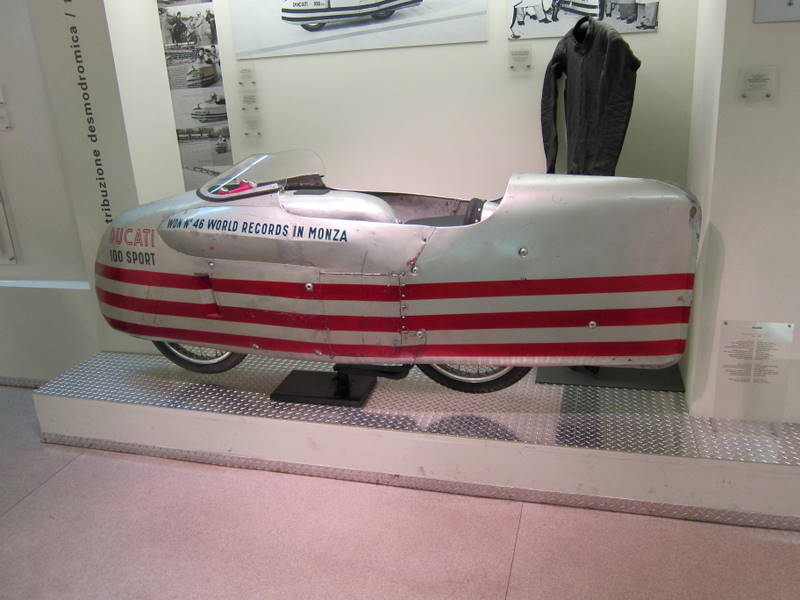
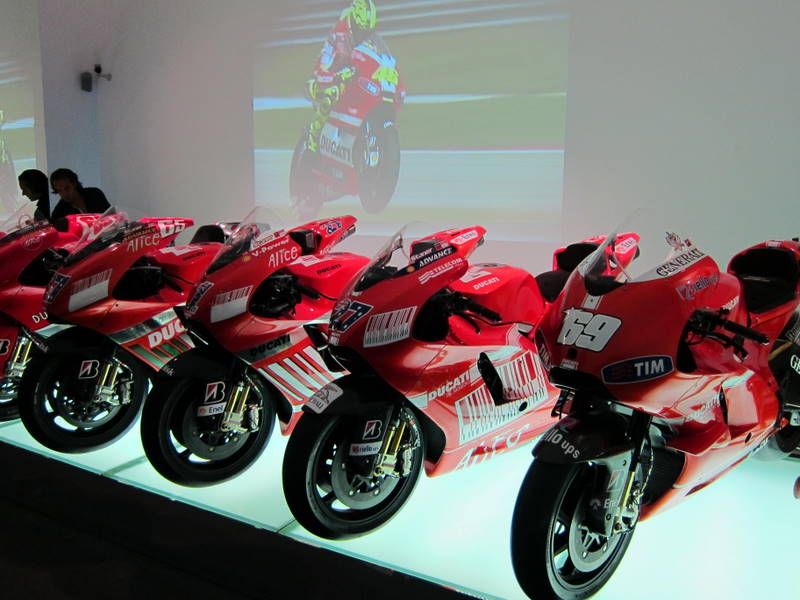
Ducati actually started it’s existence in 1926 making parts for radios. At various times it also made radios, mechanical calculators and even electric razors. Just after WWII they started producing a small motor to add to bicycles and their first actual motorcycle was almost a bicycle with a 60 cc engine capable of 40 mph. It was dubbed the Cucciolo (puppy) due to it’s exhaust note. One thing led to another and now they are one of the best known motorcycle brands in the world probably because they devote 10% of their revenues to racing and do extremely well at it, having 13 world championships in the last 21 years. They also won an early land speed record on the curious vehicle shown below.

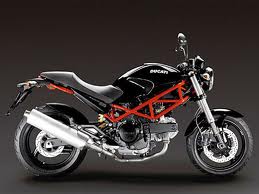
A unique Ducati feature is the “desmodromic” valve system that uses cams to both open and close the valves. This allows them to both rev higher by eliminating “valve float” at higher RPMs and have higher power because they are never compressing valve springs. The downside, in my personal experience, is that it is virtually impossible for the owner to do a valve adjustment. It requires a well trained mechanic to do that and it is, of course, expensive. Another outstanding feature is their frame as you can see in the photo below in their top selling model, the Monster. It’s less expensive than the racier looking bikes and in general is more practical for everyday use. If I get another motorcycle (and I’m seriously thinking about it) it would be a Monster – used probably.

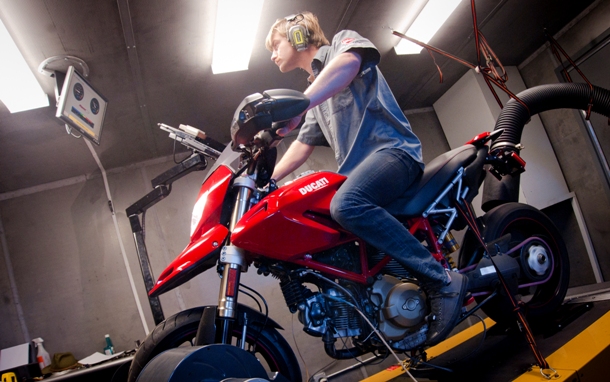
The tour was both of the factory and the museum. I found the factory fascinating. I’ve never been in a factory that produced mechanical stuff and found it really interesting – but of course I’m an engineer. Every bike is tested on a dynamometer. One of the testers that we saw is a woman and the testers need to be master mechanics.  The bike remains stationary with a rider aboard. The rear wheel is free to turn and they measure power at the rear wheel, test the brakes, etc. The dyno shows the speed (at least I’m pretty sure that’s what was said) and one was clocking 160 km/hr. which is almost exactly 100 mph.

The tour was all in Italian and I understood a lot but not all.  Natasha (a friend of Boris?), our tour guide, also had excellent English to answer questions when I got lost. We saw the area where purchased parts were machined to their final specs, motors in various stages of assembly and various models of bikes in final assembly and test. Unfortunately we were not allowed to take photos due to some proprietary techniques used there. In the museum there were, of course all kinds of motorcycles from the start to the latest superbikes which have 4 cylinders with 16 valves and produce over 160 hp. That’s almost as much as my Audi A4 but they weigh only 380 pounds – a rocket for sure.

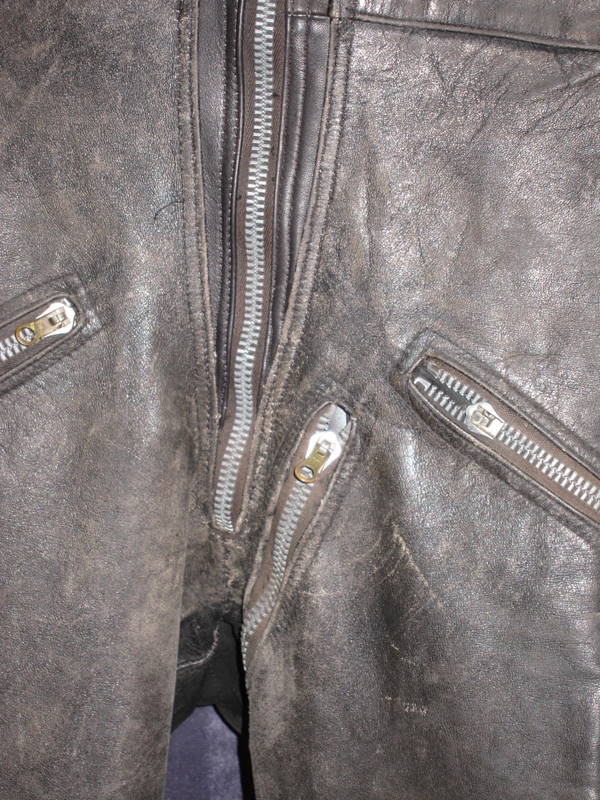
The among the highlights of the tour were a riding suit with a special zipper as shown in detail in one of the photos. We were asked to guess the utility of this zipper. Well, consider that in a really long race the rider has certain needs – that’s the purpose of this zipper. Sounds pretty scary to me.

Another highlight was the conversation with Livio. While I wanted to try my Italian, his English is excellent. He has been interviewed by the New York Times (click here for the link) and I found a video of him discussing Ducati history (click for here for that link).

In the end, it is always the people that make the experience special. Natasha and Livio were great.

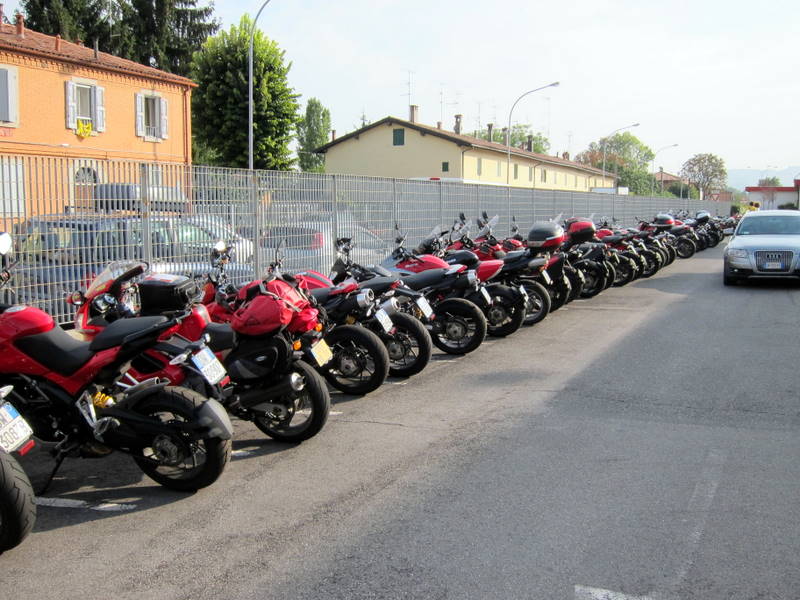
BTW there is a parking area in front of the factory for motorcycles but you can only park your bike there if it is a Ducati, otherwise you are relegated to a distant parking area. Of course if you work for Ducati you receive a 30% discount on a Ducati. Hmmm, maybe I can get a job there.

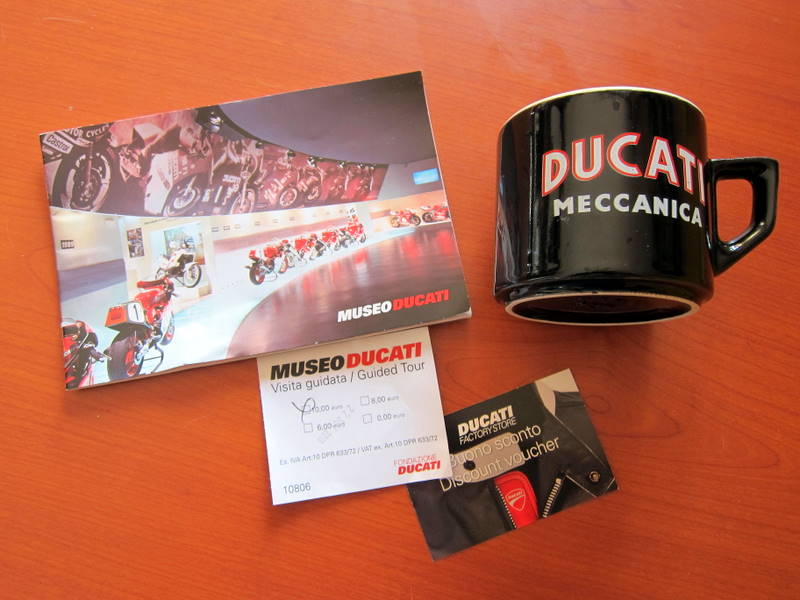
And of course I came away with a souvenir from the factory store that I can use every day. You’ll have to click on the photo to see get a better view of the cup.

Forza Ducati! It’s a cheer kind of like “Go Ducati!” or “Long live Ducati!”