The History of Bologna
Sunday, April 27th, 2014
After my less than exciting experience at MAMbo I wanted to visit another museum and was totally free of any commitments on Friday the 25th. As a side note, I had spent much of the morning trying to correct some problems with my blog so I didn’t leave the house until almost 1:00 in the afternoon. As I reached the bottom of the hill to take the bus I noted that both the bar and the tabaccheria on Saragozza were both closed. They are always open except on Sunday so I immediately knew that it must be a holiday. April 25th is the Festa della Liberazione (Liberation Day) which is a national holiday commemorating the liberation of Italy from Nazi occupation in 1945. In any case that doesn’t mean much to me except that the buses will be running on a holiday schedule which means no buses to the center of town. So I must walk further. The museum is in Palazzo Pepoli in the historic center and was constructed by a member of the important family Pepoli in 1344 and remained in the family until 1910.
Now it has been converted into the Museum of the History of Bologna. It’s really a well done museum. You follow the history of Bologna from the Etruscan period – roughly 500 BC to the current day. Interesting and very well done exhibits. All of the written displays are in Italian but there are sheets of paper in each room with translations into French, German and Spanish.
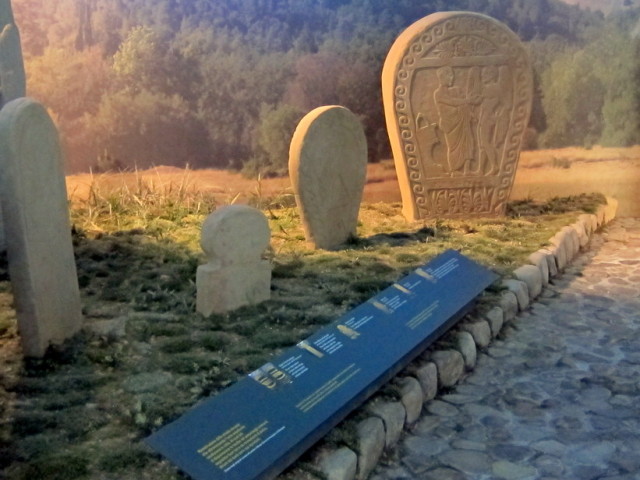
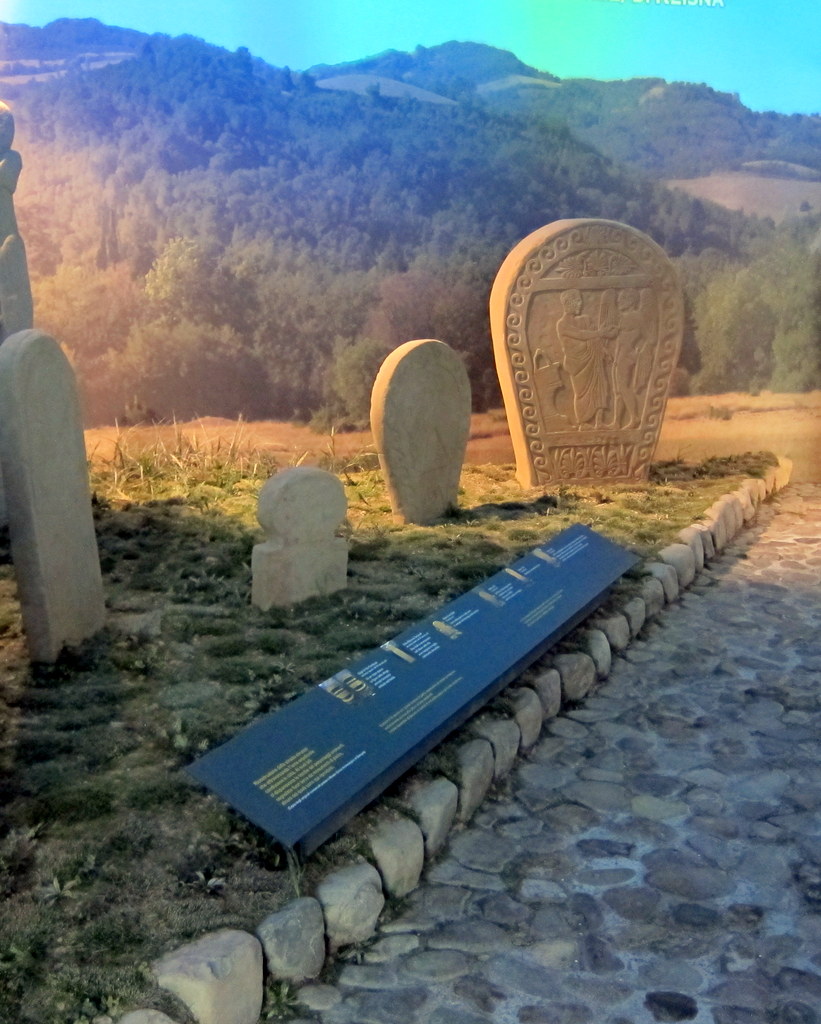
A walkthrough recreation of an etruscan scene.
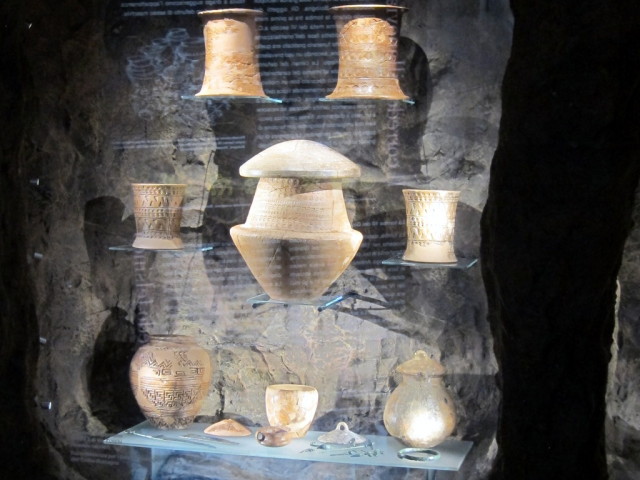
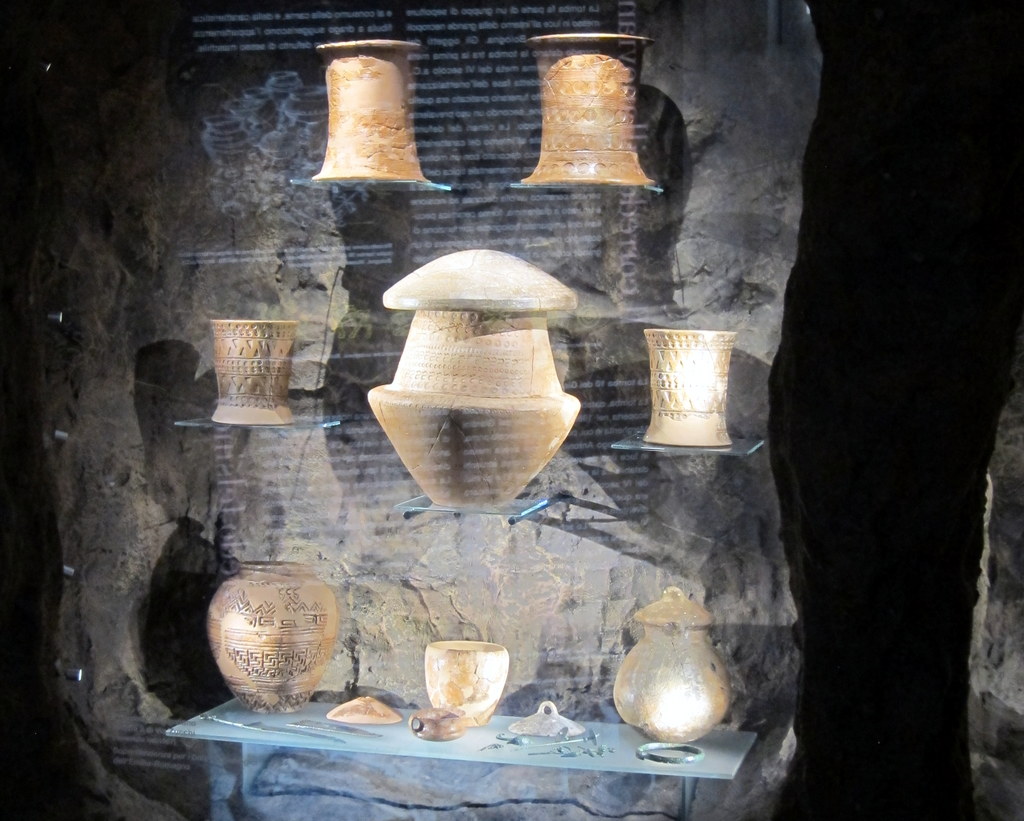
Etruscan objects from the 5th century BC
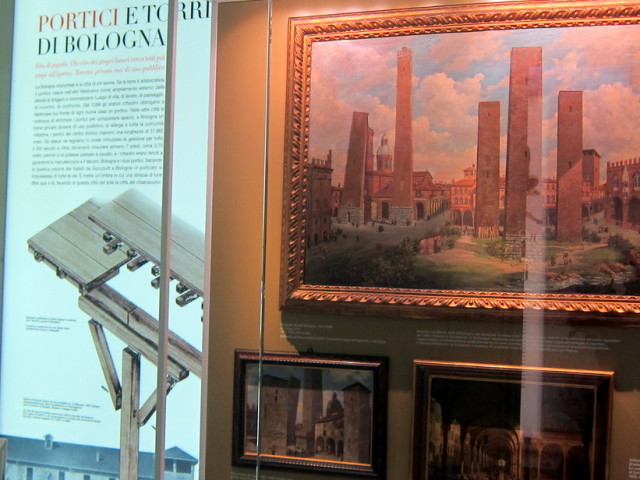
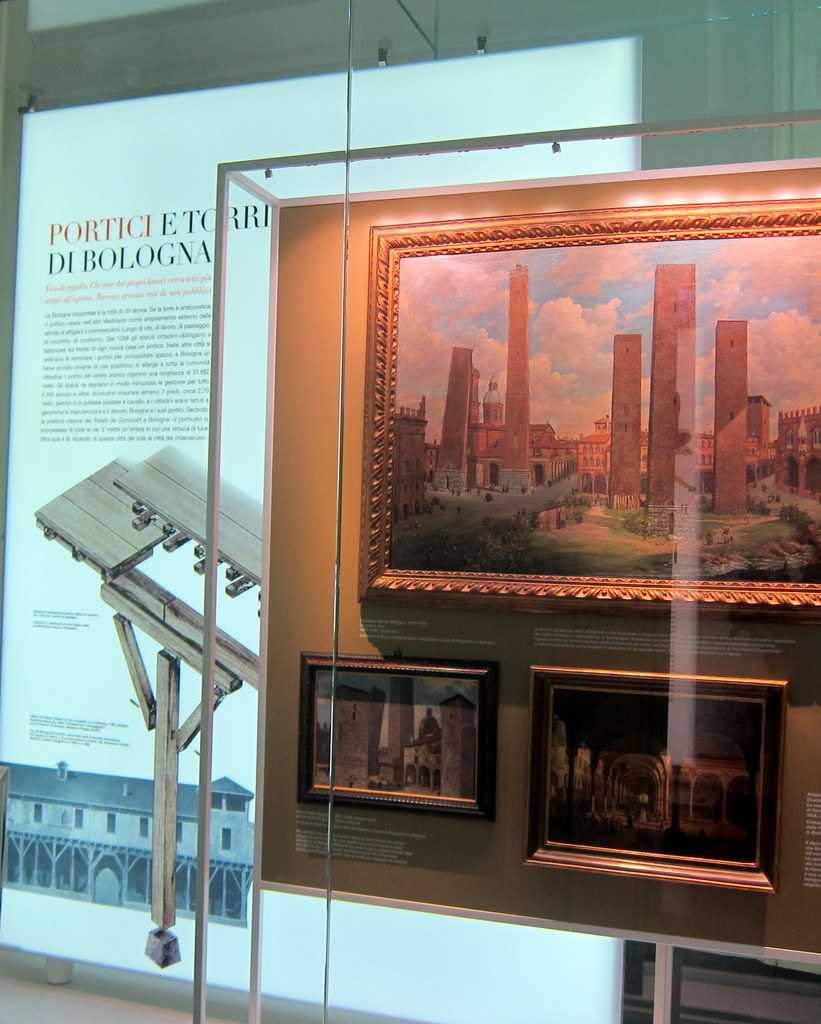
Description of earliest porticos and painting of early city with lots of towers
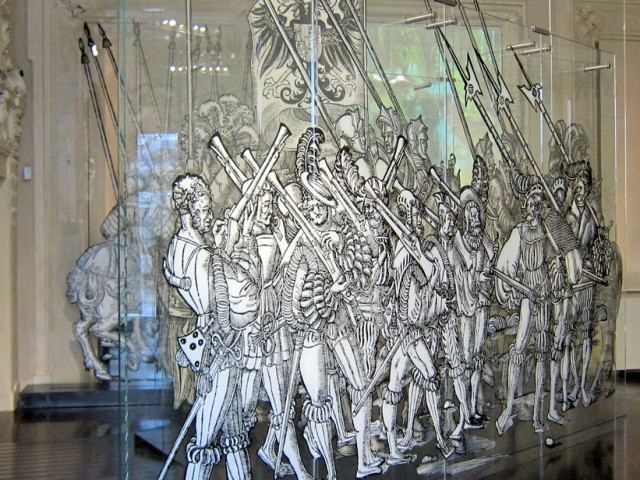
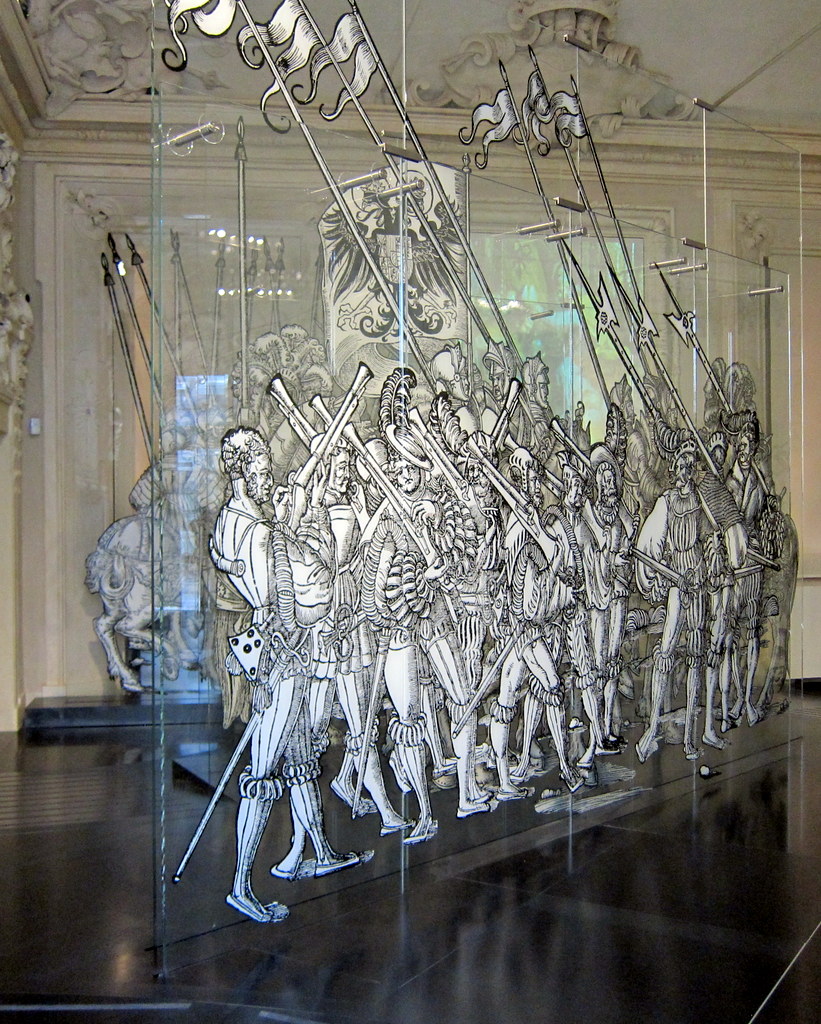
Painting on glass
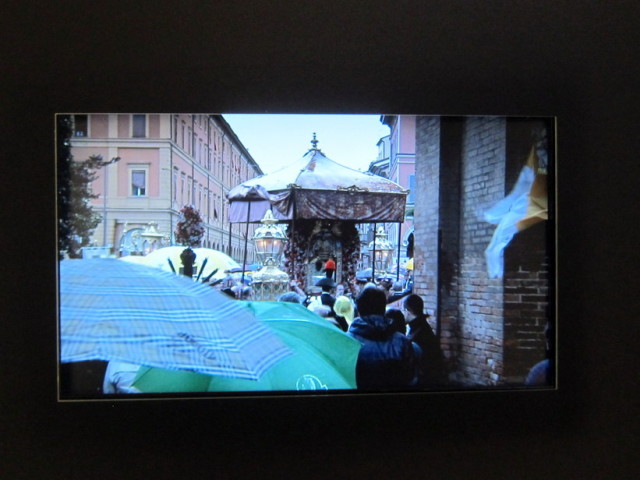
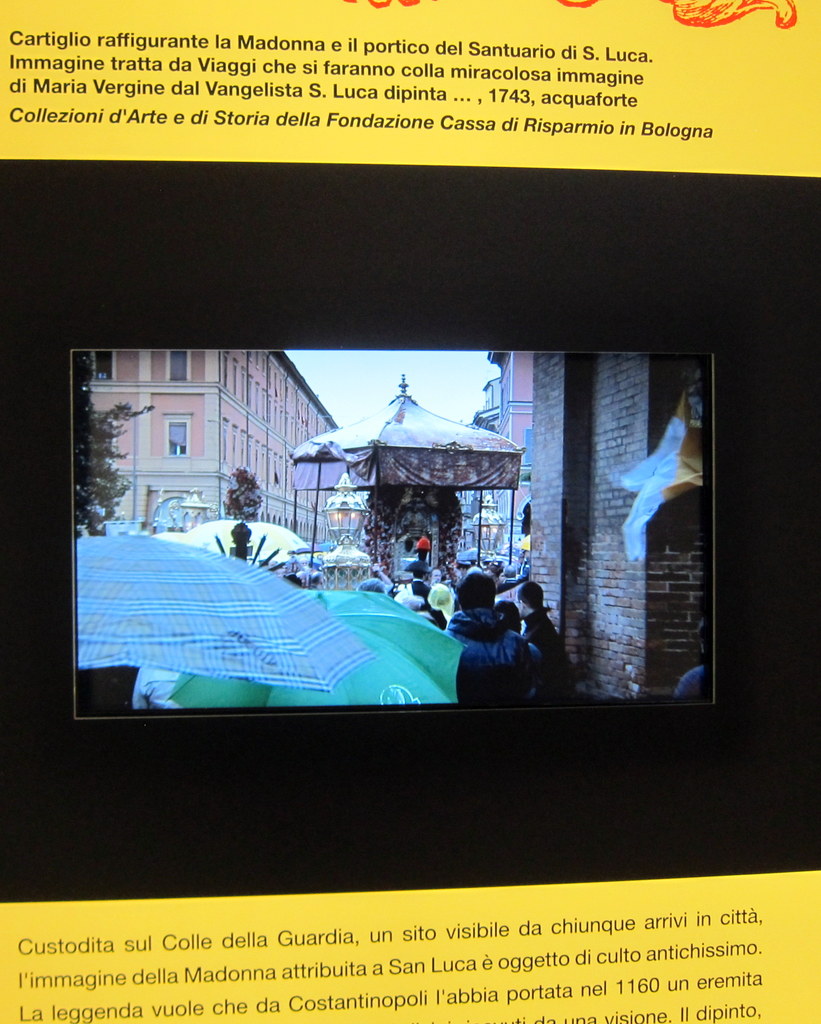
Video of transporting the Madonna from San Luca to the Cathedral of Saint Peter.
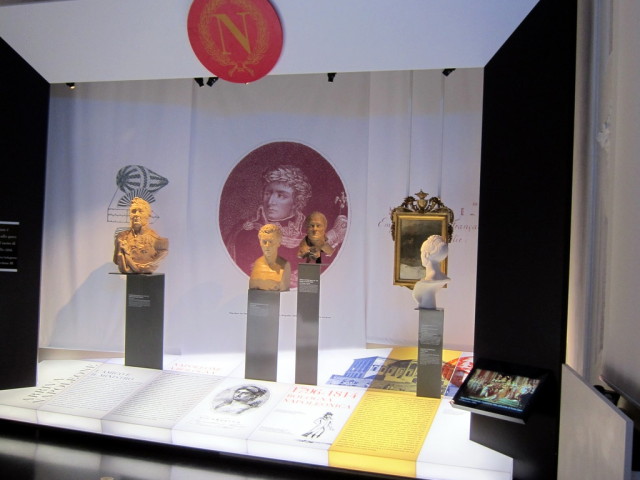
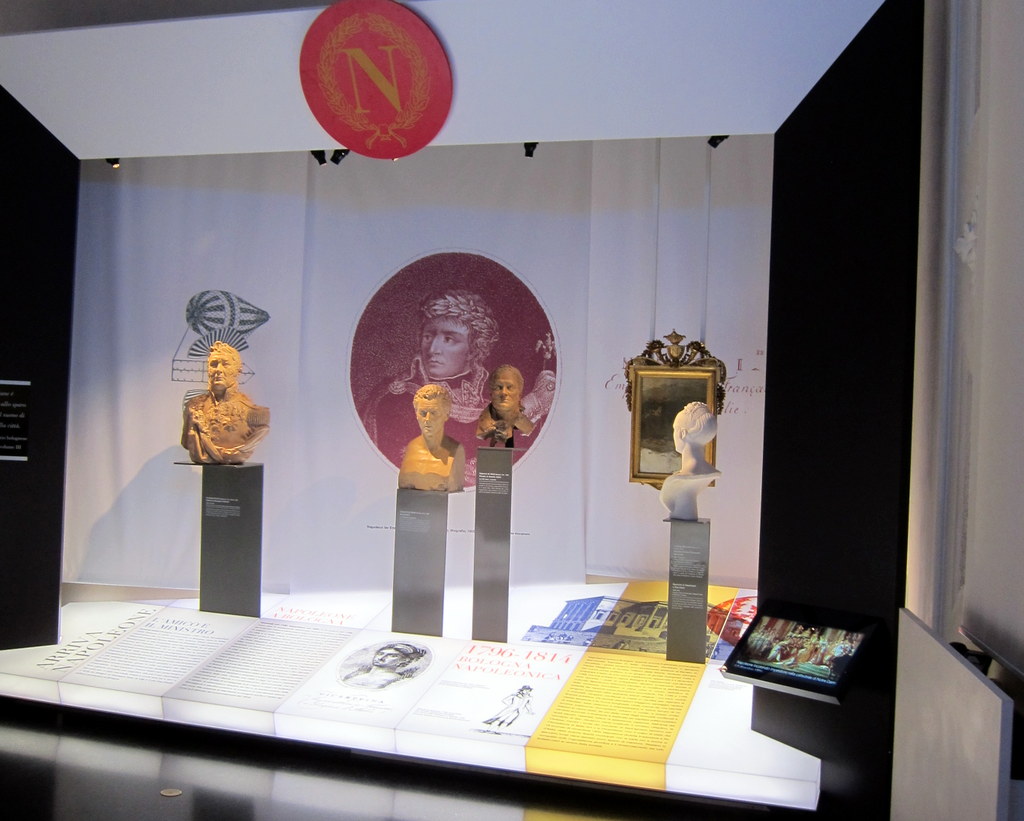
Information of the Napoleonic period
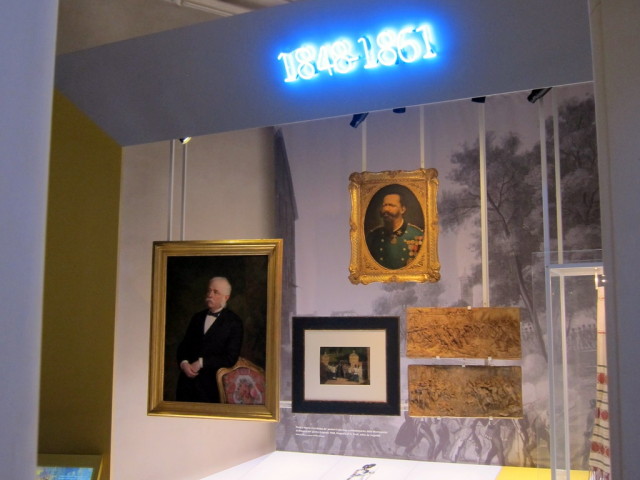
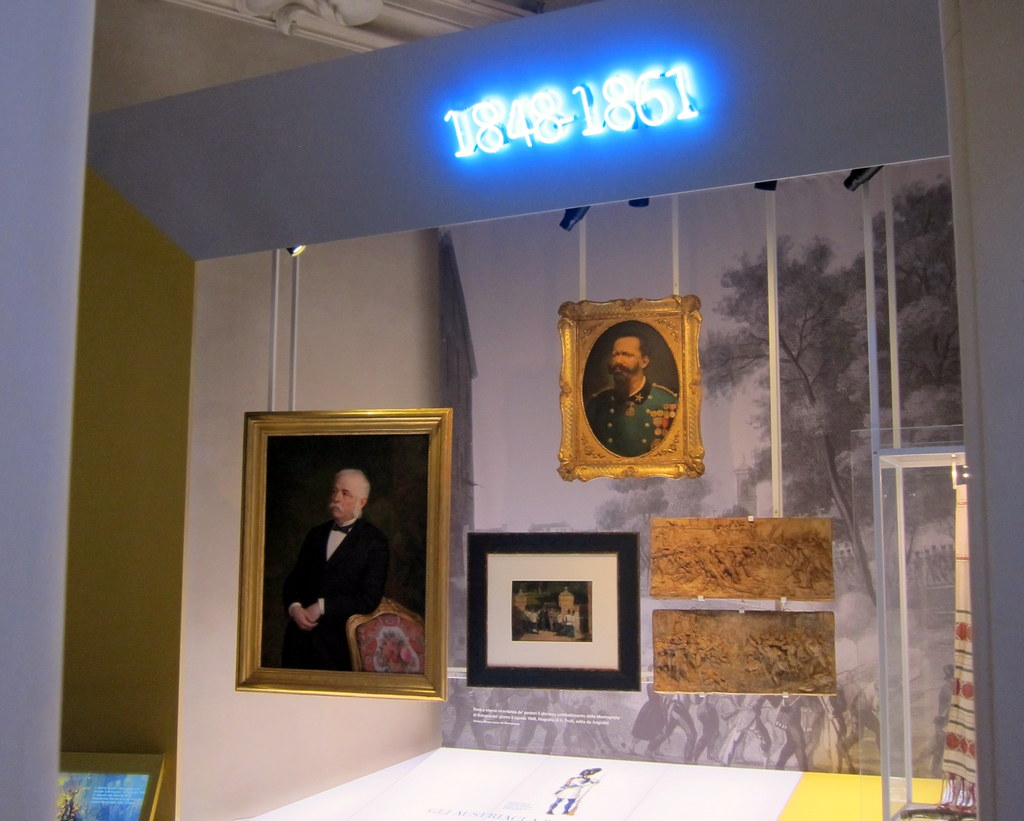
The period leading to the Risorgimento (unification of Italy)
As you can see there are many interesting exhibits. Half of the exhibit is on the ground floor and half on the third floor; in Italy it’s the second floor – the first floor is called the ground floor then up one flight is the first, etc. So I took the elevator up and before returning back down I decided to take a respite sitting on one of the nice black leather couches near the elevator.
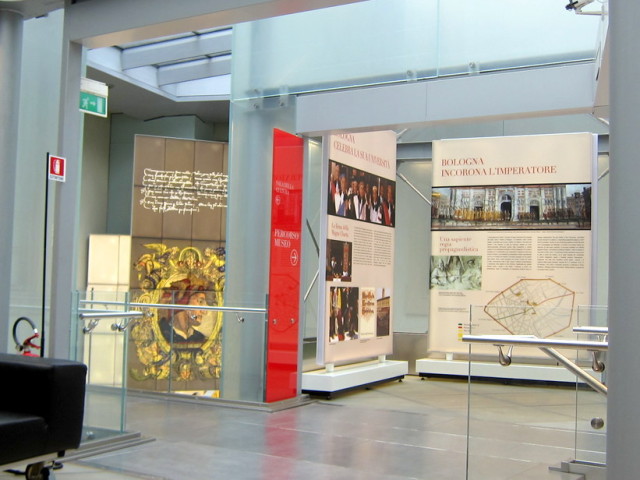
A view in another direction from the same seat on the couch
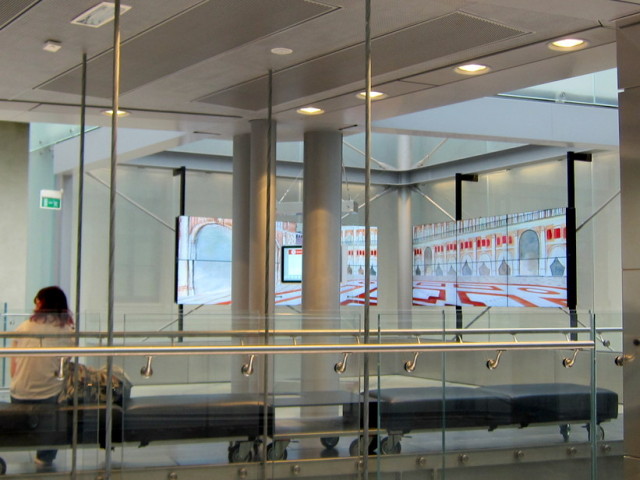
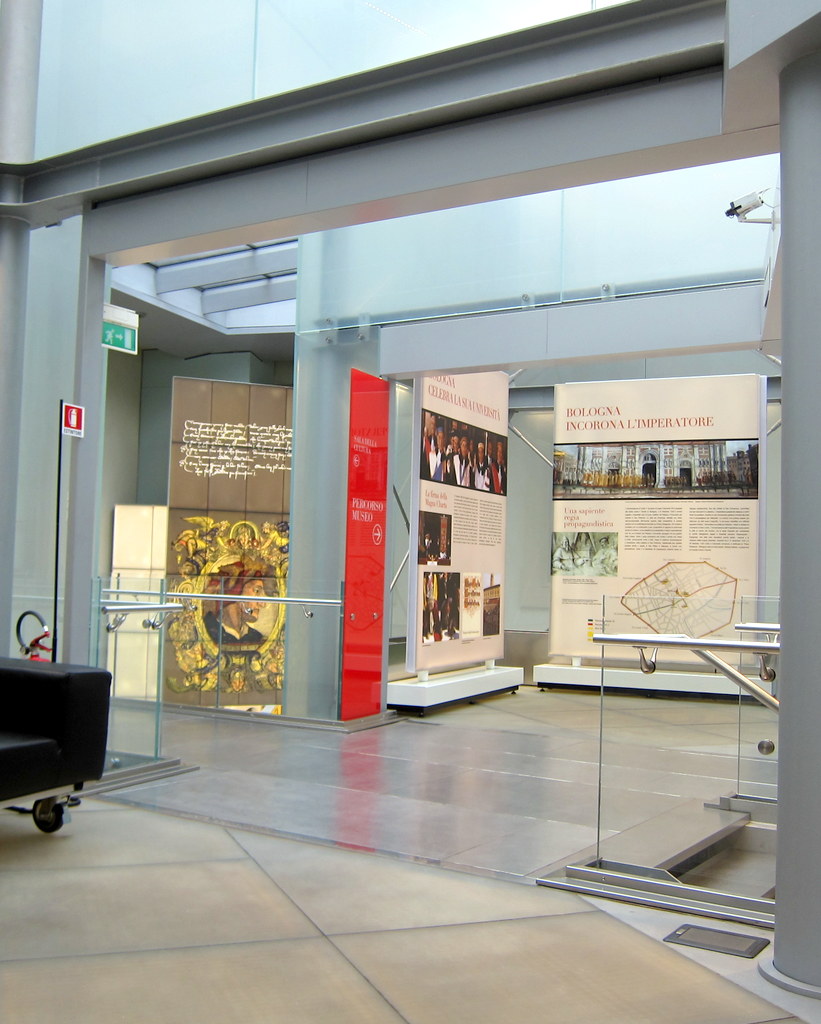
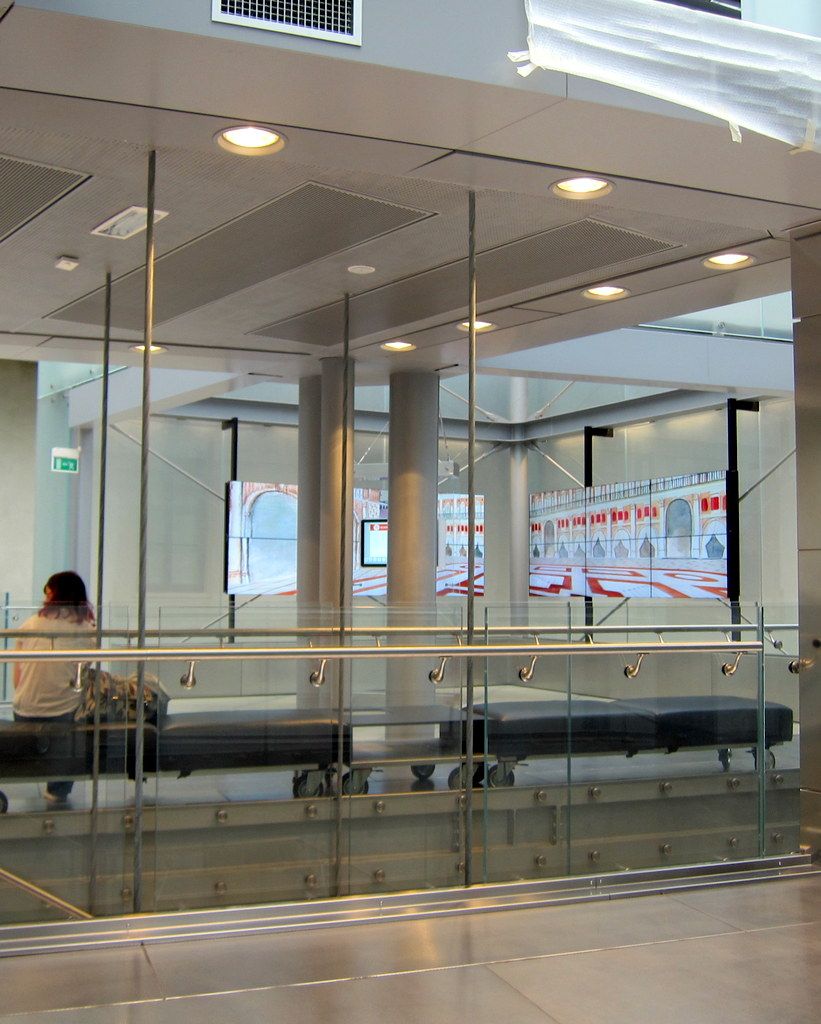
The architecture inside, stainless steel, cables, glass – continuous video panel along the wall
While there I took a couple of pictures of the interesting architecture inside the museum and in the process must have put my camera, which is also black, down on the couch and, well, forgot and left it there. I didn’t notice until the evening when I reached into my bag and realized that it wasn’t there. I want back the next afternoon and to my great relief someone had found it and turned it in. I’m always delighted when honest citizens allow me to recover gracefully from a mistake that I make.
► The History of Bologna
Posted in Culture, Travel | 2 Comments »
MAMbo
Friday, April 25th, 2014
No that’s not a dance, it’s the name of the Museo d’Arte Moderna di Bologna. In previous trips here I have never been to a single museum although there are many in Bologna. I have gone to 3 meetings at the cafe that’s next to MAMbo and decided that would be my first museum visit. Besides, who can resist a name like that. Well, I was quite underwhelmed. While the building is large, the museum only occupies one floor and at least half of that is dedicated to a single artist, Morandi. A wkipedia page for Morandi says that he lived his entire life in Bologna, from 1890 to 1964. He was especially known for still lifes (especially the same bottles over and over) and landscapes (ditto). After about the 10th still life of bottles it gets, you know, a bit boring.
 I tried to take a picture but was quickly admonished that it was not permitted even without a flash. There was no sneaking photos because there was a monitor, it seemed a volunteer, that followed you around as though you were a potential shoplifter in a department store. A bit annoying even if I wasn’t planning to take pictures. Perhaps they have had problems with theft or vandalism or perhaps the monitors are just bored because there’s not much going on. I’ve always thought that being a museum guard/monitor must be one of the most boring and difficult jobs imaginable. You’d always be on your feet with little change in scene. Of course if there were a lot of people there’s some interest in people-watching but at MAMbo there were very few people.
Â
-
-
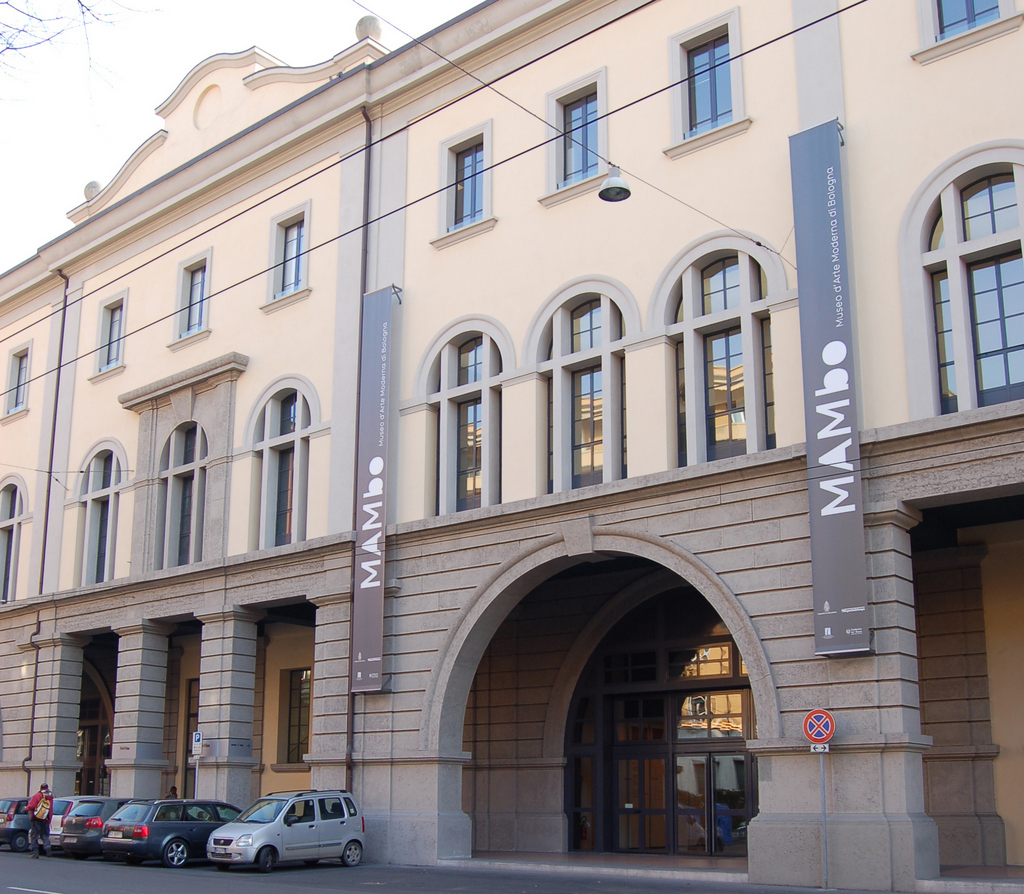
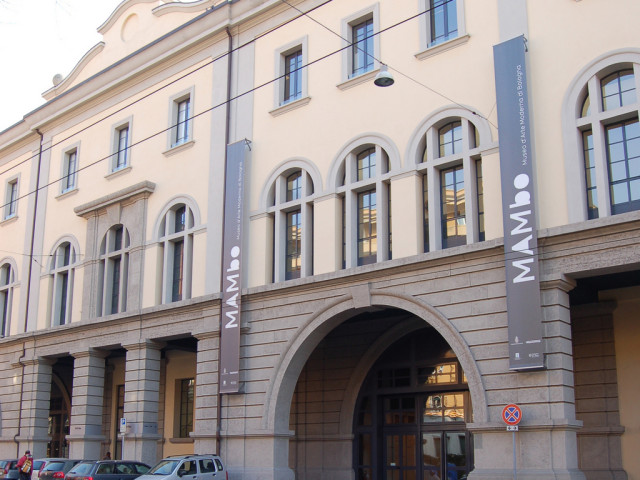
The outside is impressive
-
-
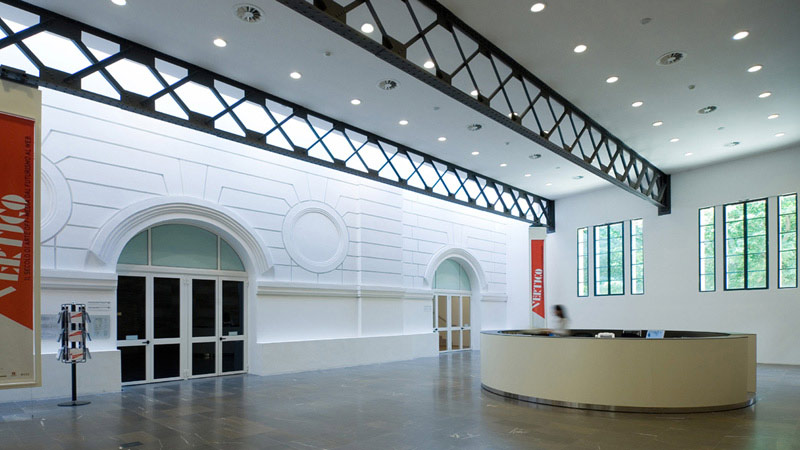
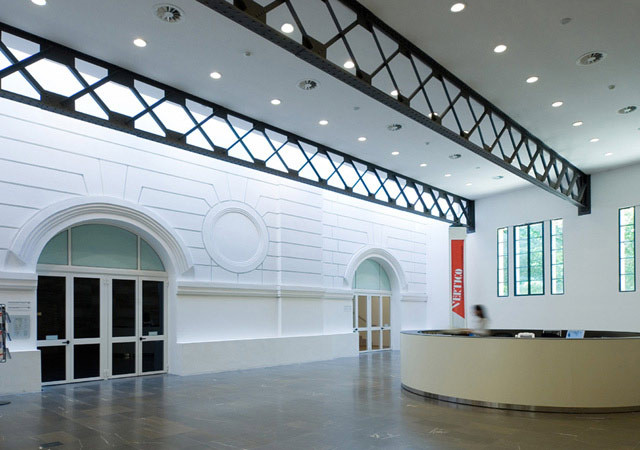
Quite an impressive and dramatic reception area
-
-
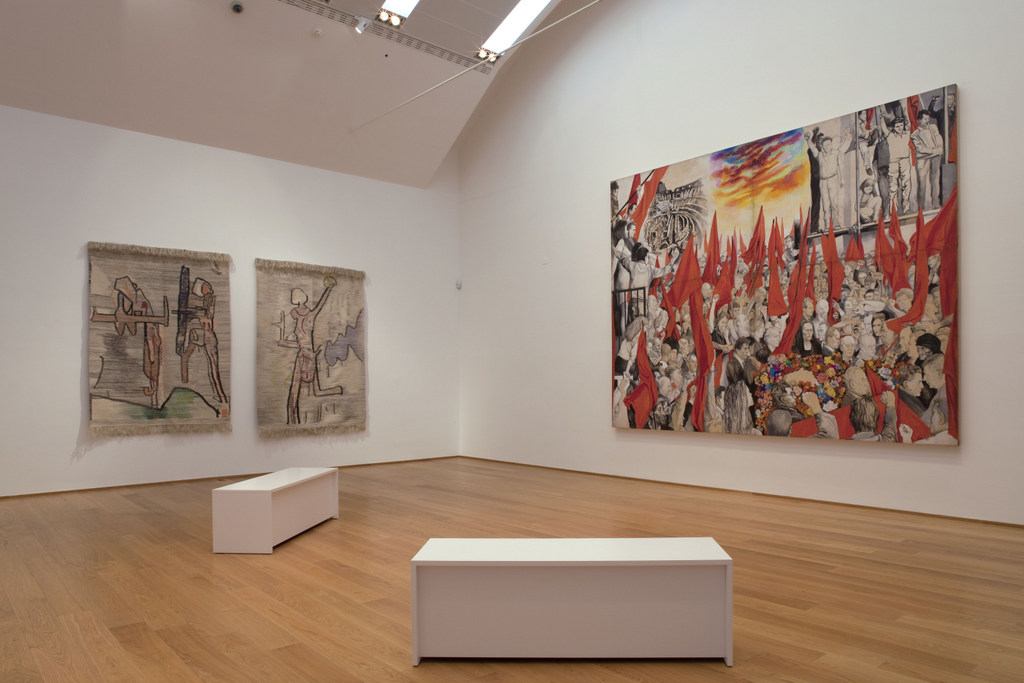
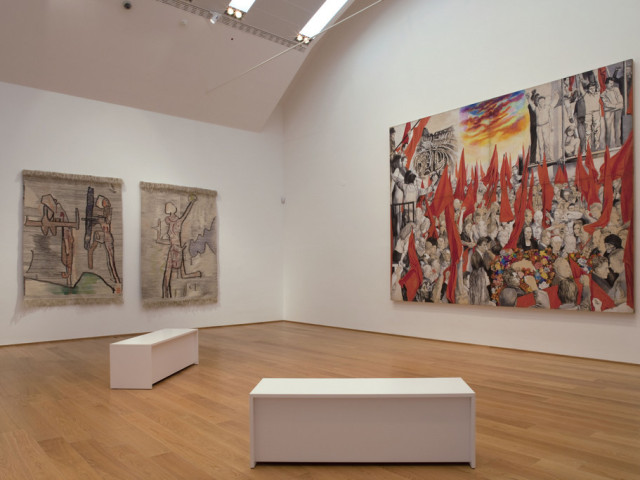
One room – not my picture, copied from the web
In the end, I was quite disappointed and wouldn’t recommend it to anyone other than a serious Morandi fan. Perhaps it needs a few years to mature and expand to make it truly worth a visit. Sorry Bologna. I’m looking forward to another couple of museum visits to compensate for this one.
► MAMbo
Posted in Culture, Travel | 2 Comments »
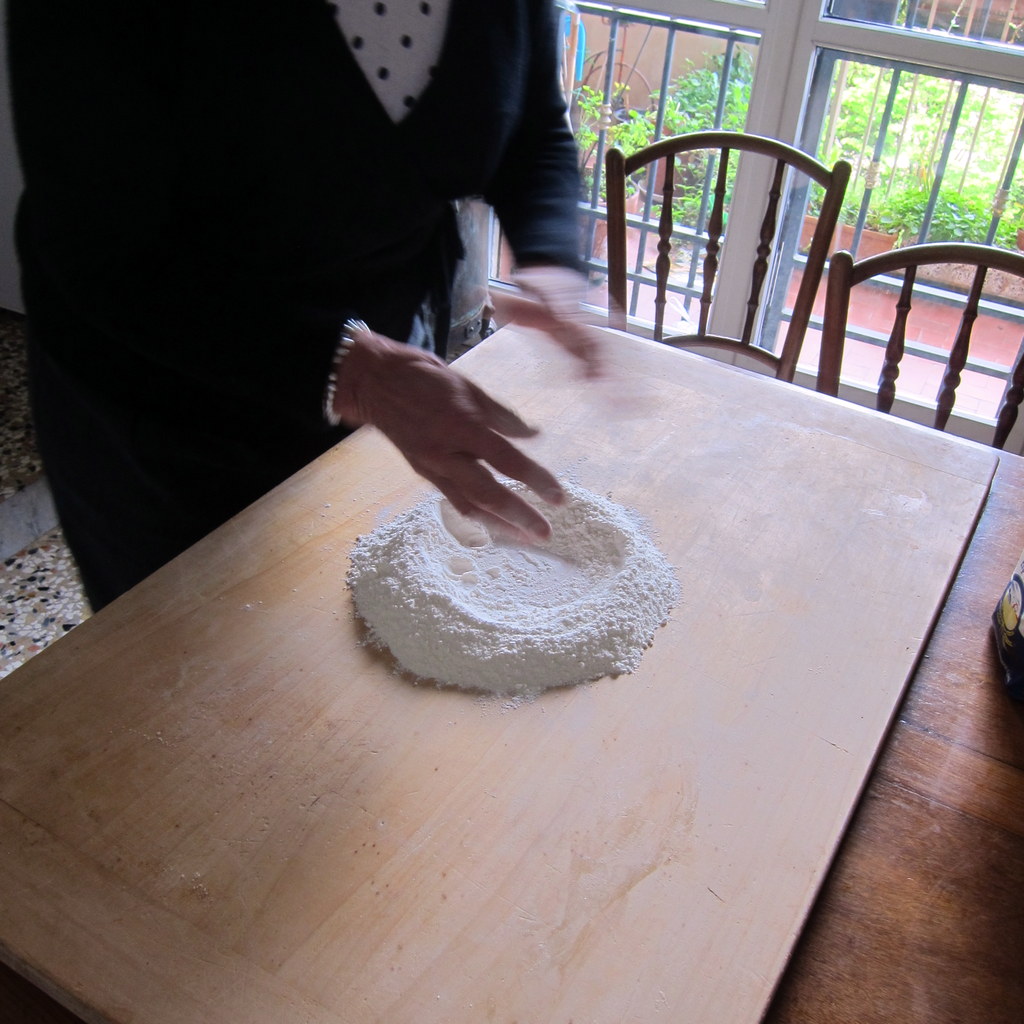
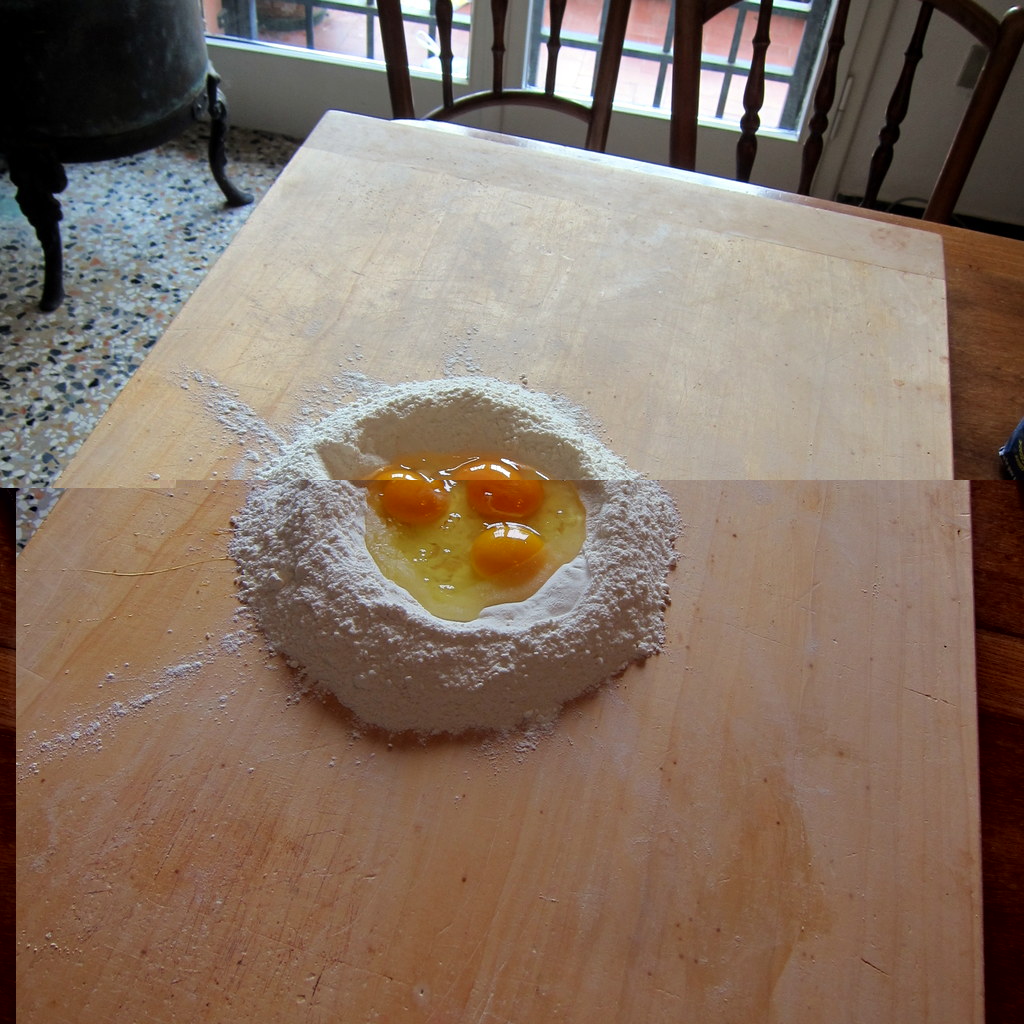
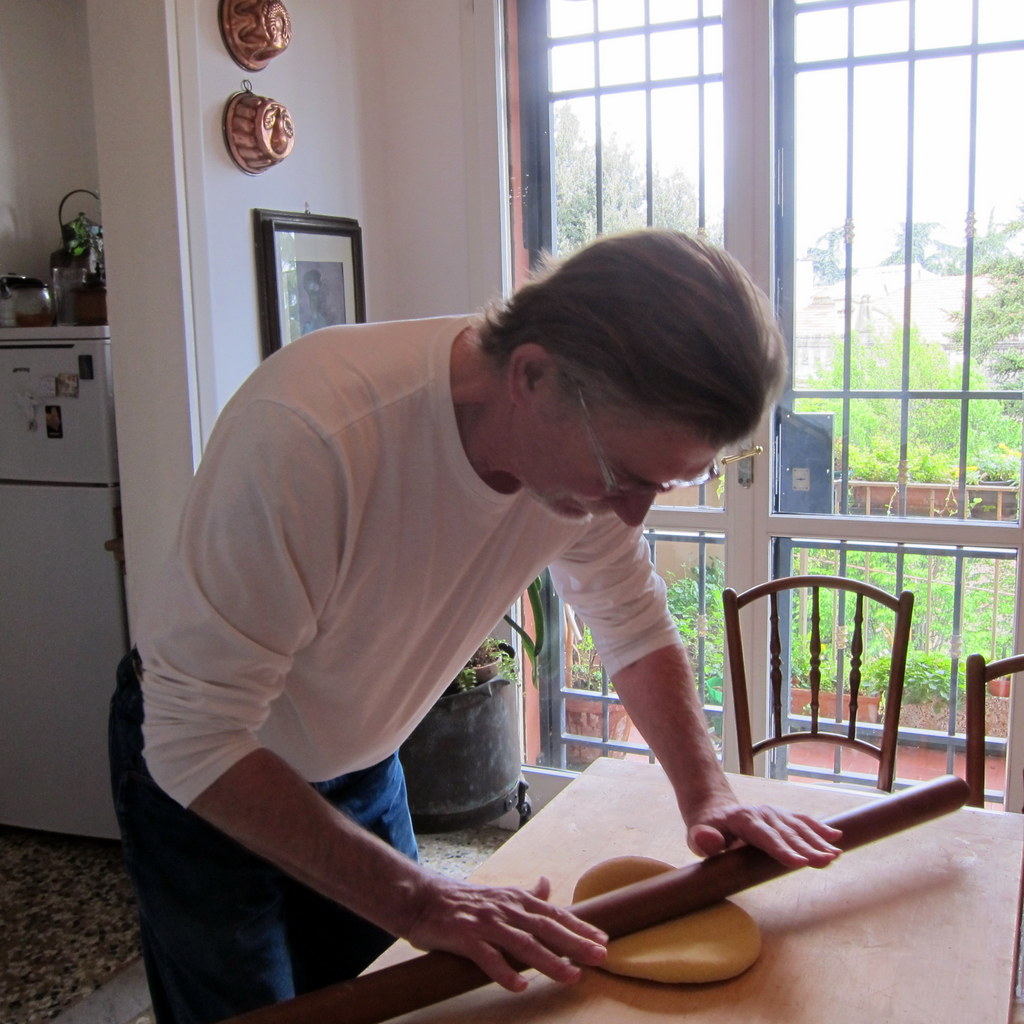
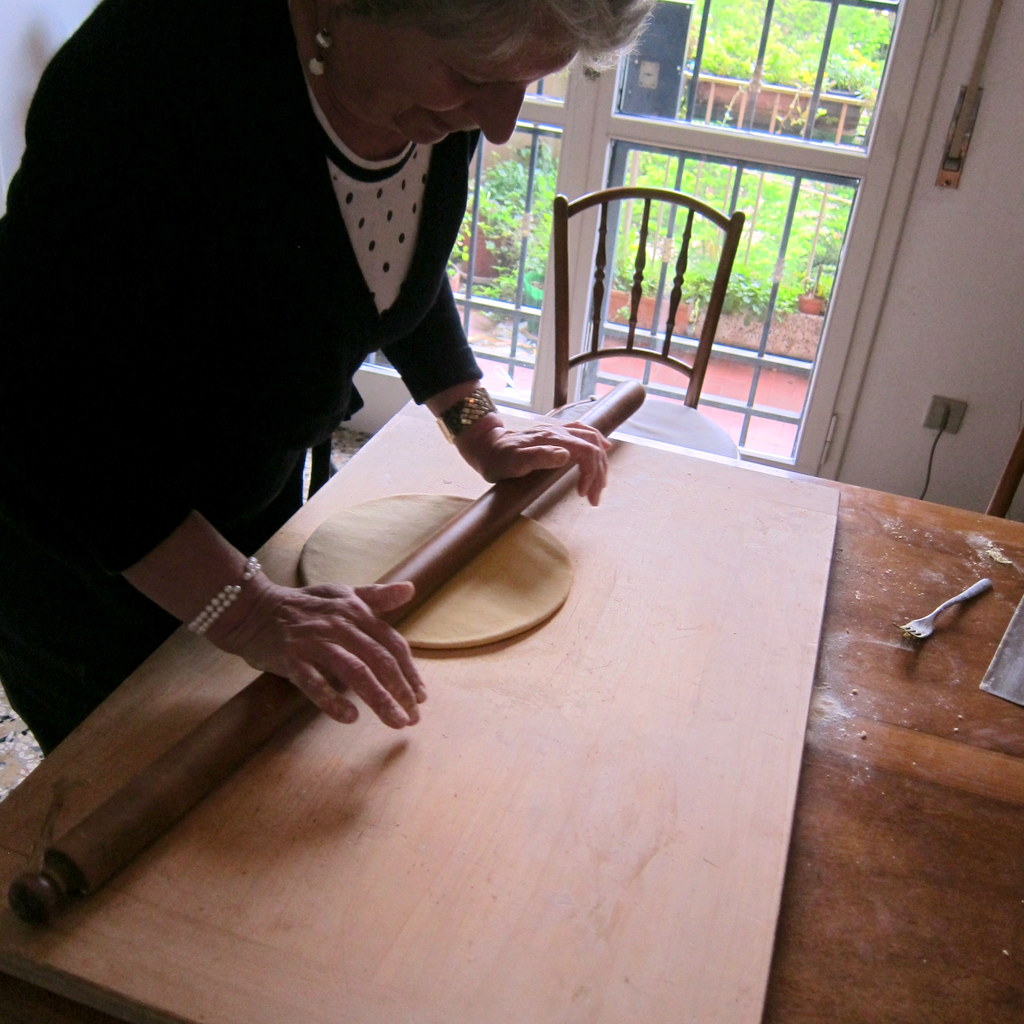
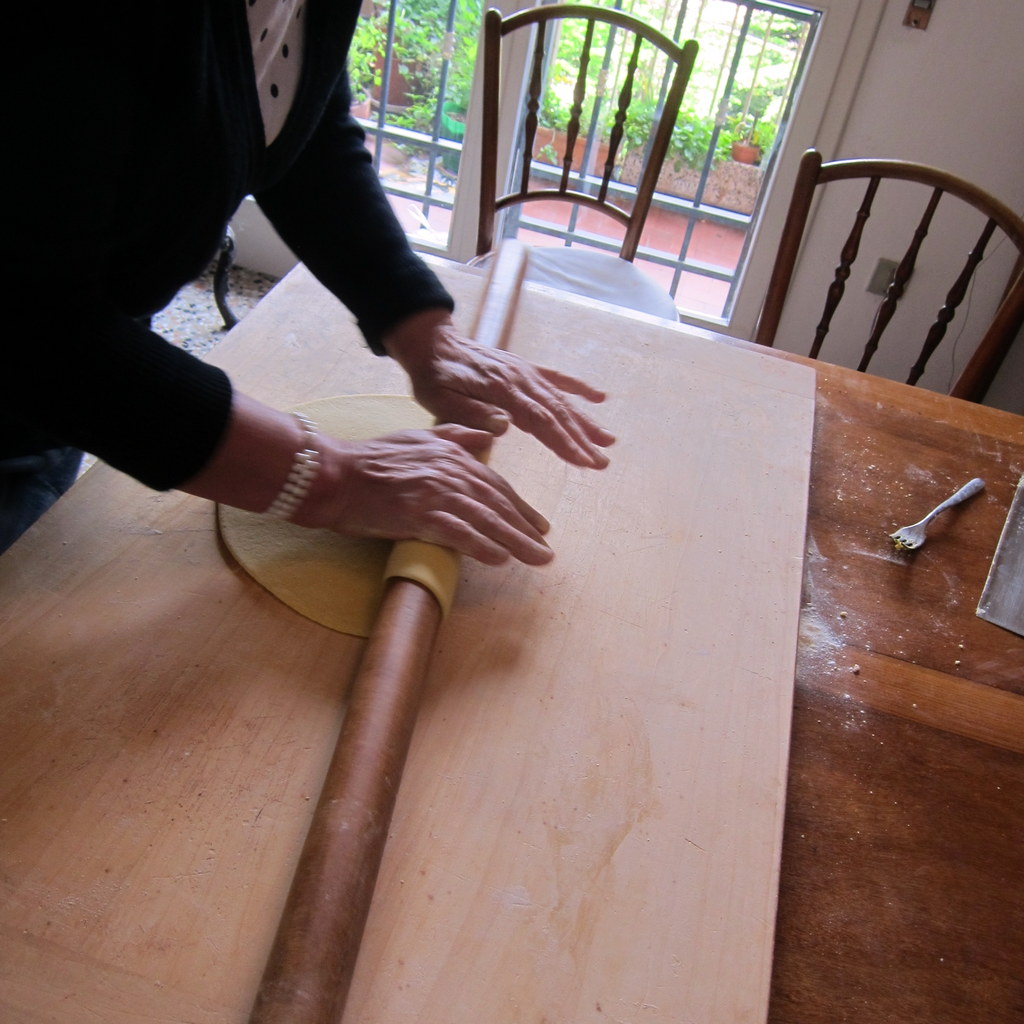
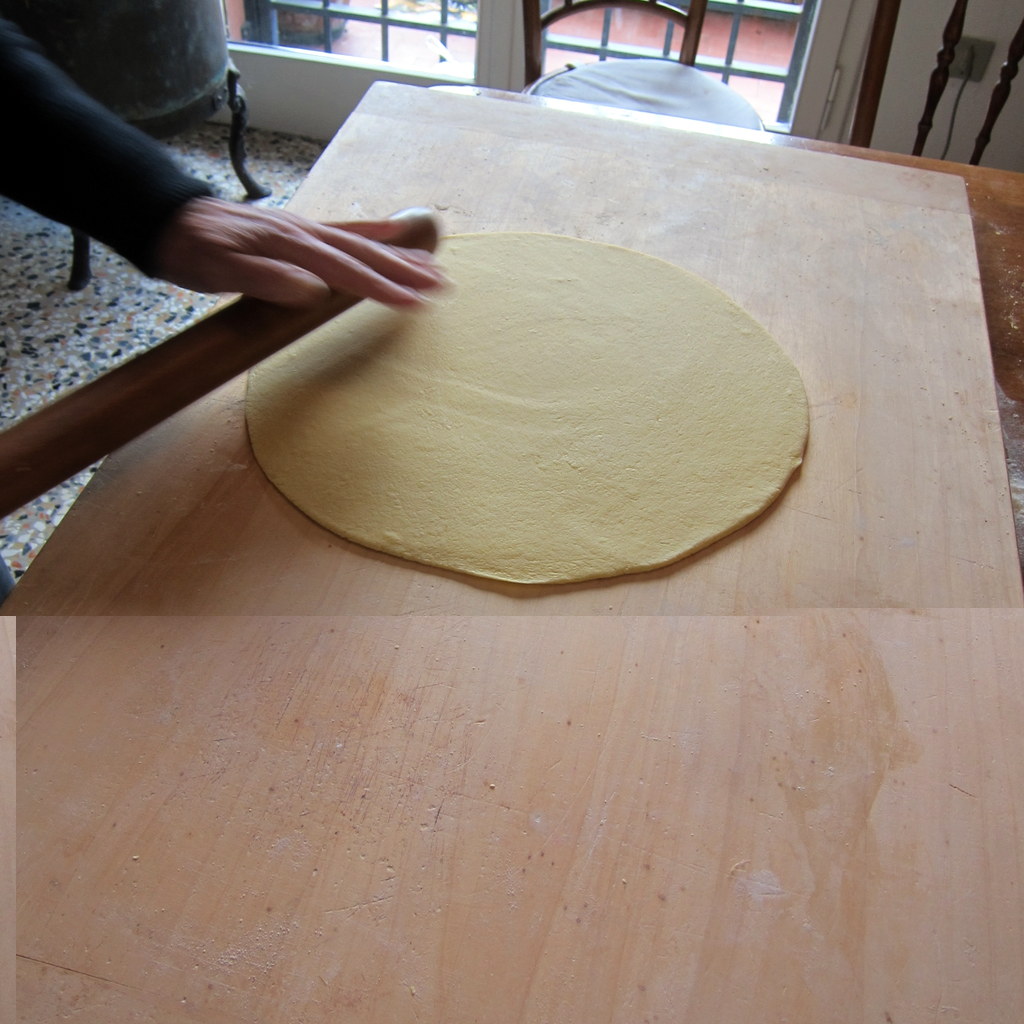
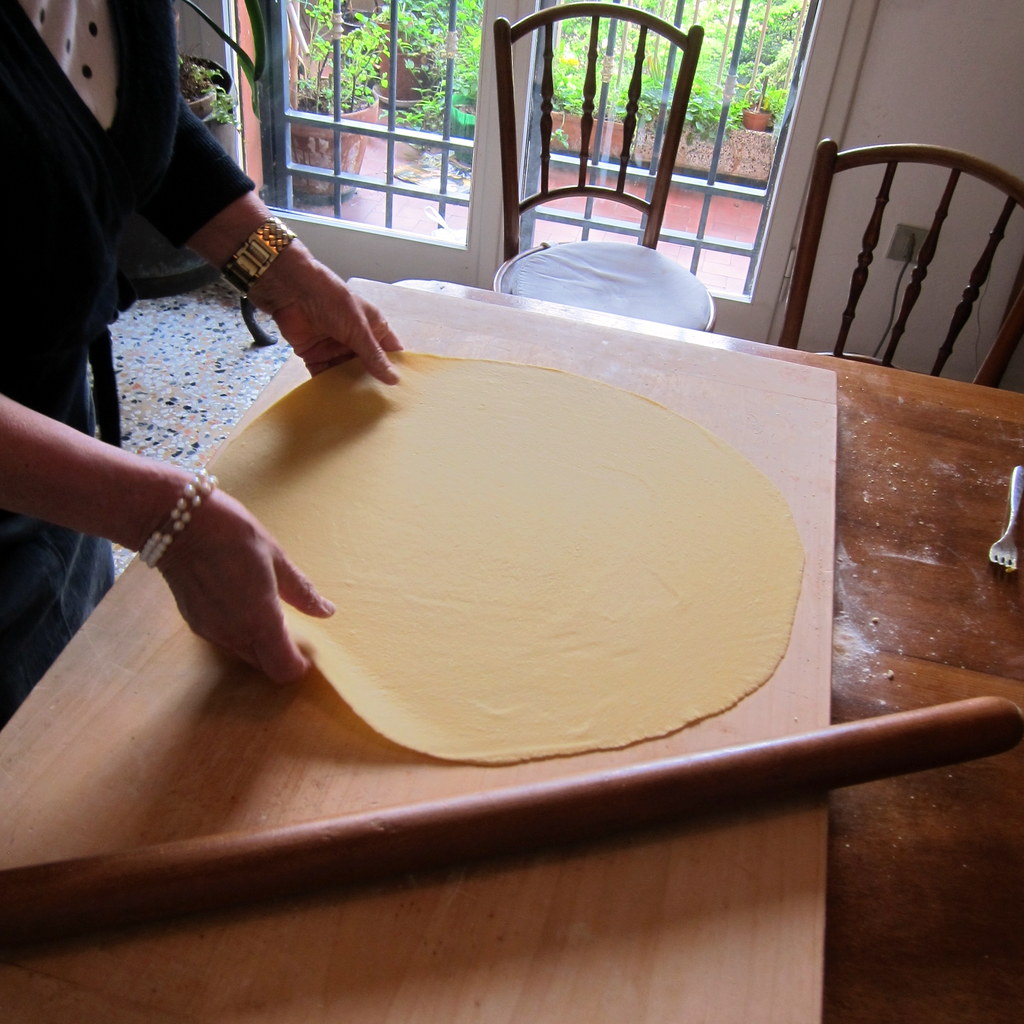
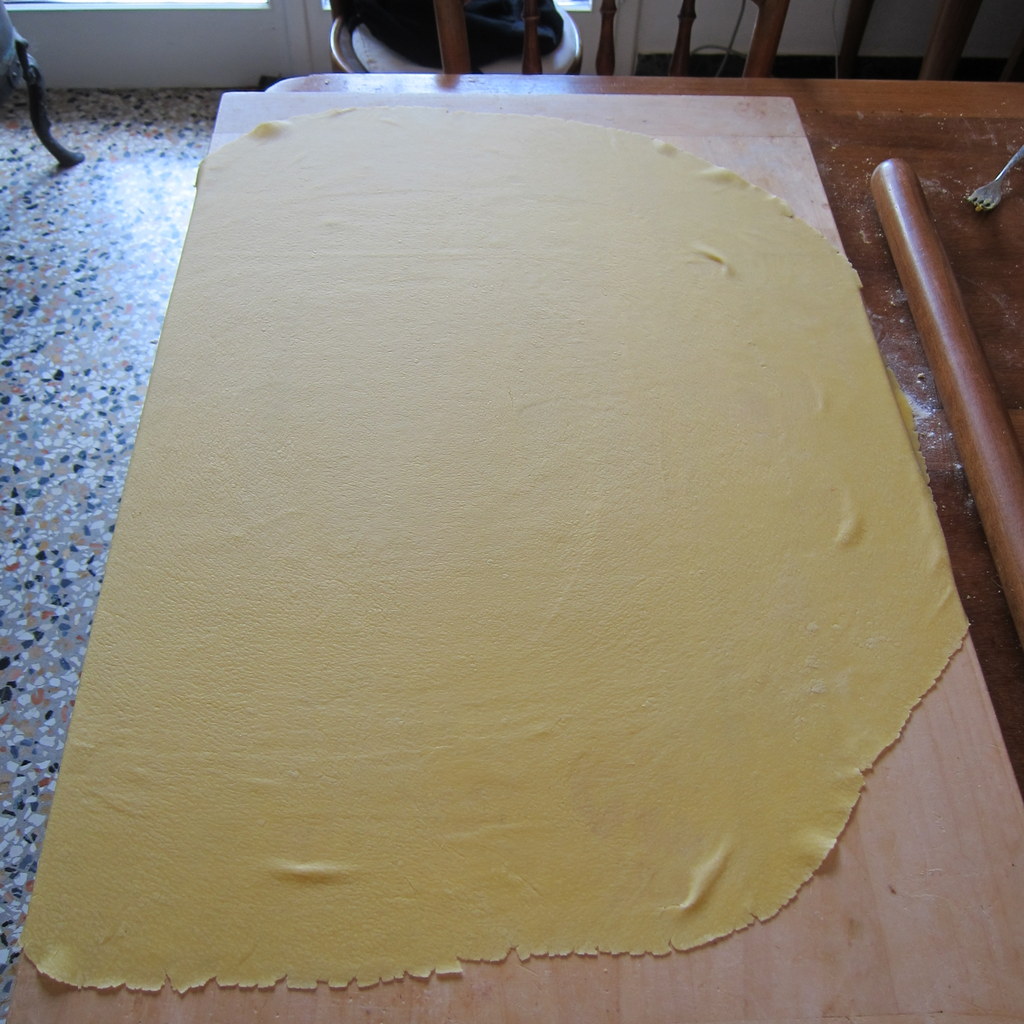
Come si fa la pasta (how the pasta is made)
Thursday, April 17th, 2014
► Come si fa la pasta (how the pasta is made)
Posted in Culture, Food, Travel | No Comments »
Dinner with Alessandro and Antonia
Wednesday, April 16th, 2014
It’s not often that I’ve been invited to anyone’s home for dinner so I was surprised when Alessandro invited me to his house for dinner. I met him through conversationexchange.com and we have had only one Skype conversation. He’s from Napoli (Naples) and it’s now a running joke between us that Napoli is the most beautiful city in the world. Actually he’s from a town near Naples. In any case he unexpectedly called me and invited me to dinner at his house. Everyone has told me that people from the south are warmer and more open. You can certainly say that about Alessandro – irrepressible would be a better word. So he came to my house to pick me up at 6:00 on monday and we headed off in the direction of his house 20km from Bolognaat about the midpoint between Bologna and Modena. The first stop was at the biggest supermarket that I’ve ever seen. He bought enough food to feed an army and a bottle of wine. Of course we found a bottle of white wine from Campania (the region of Napoli). Then we off again, driving at breakneck speed too close to the car in front. I think its the neapolitan style.Â
Alessandro dragged me upstairs to show me where his town (Marcianise) was and where he has another house that he inherited. There’s another town nearby that I had never heard of called Caserta. He was using Google earth and showed my the royal palace of the Bourdon king of Naples there. I thought that I had seen spectacular palaces but this was beyond anything that I’d seen. I copied a photo from the web but it really doesn’t do it justice. You can see more of this spectacular place by clicking here.
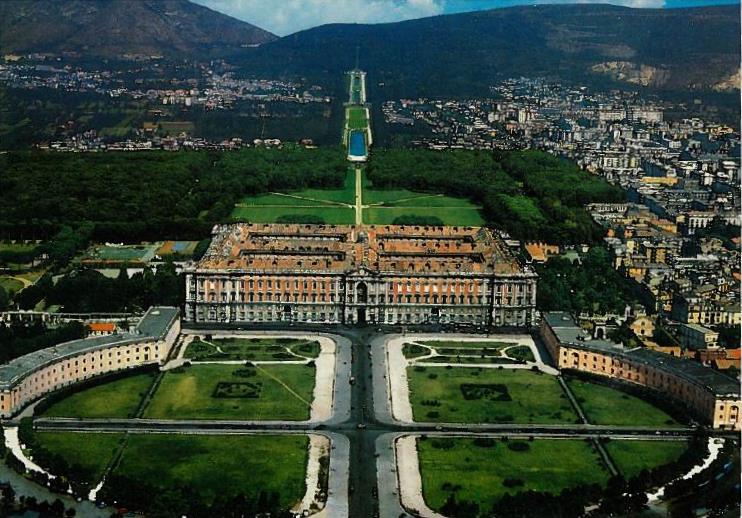
Caserta Palace
Alessandro told me much of his life story and why he wanted to learn english (he’s a structural engineer) and it’s too much to note here but one thing he said cracked me up. “Noi Italiani siamo stronzi!†That could best be translated (I think) as “We Italians are assholes!†He was talking at the time about the educational system.
In any case at some point Antonia called for us to come downstairs for dinner. She had cooked, and we ate, the following: linguini with clam sauce, octopus, salmon, a whole fish (I don’t remember the name), swordfish, mussels, salad and small fruit tarts for desert with coffee. Whew! Alessandro said that he drinks no alcohol and Antonia drinks little but the wine didn’t go to waste. I’m glad that I’m walking a lot here. After dinner he drove me back home to Bologna.
Of course with all of this I totally forgot to take a picture of them. I hate it when that happens. They are going to their house in Marcianise for Pasqua (Easter) and I hope to see him/them when they return. I’ll take photos.
Update: Alessandro somehow found my post and provided corrections to the name of his town. He also provided photos of himself and Antonia. I’m not sure what she is cooking but you can be assured that it is something wonderful!
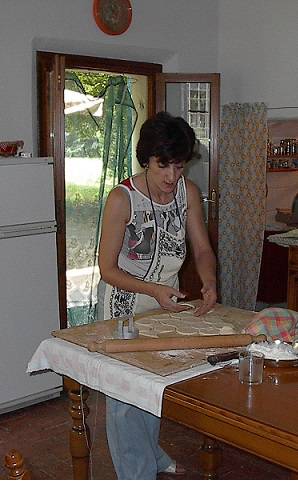
Antonia
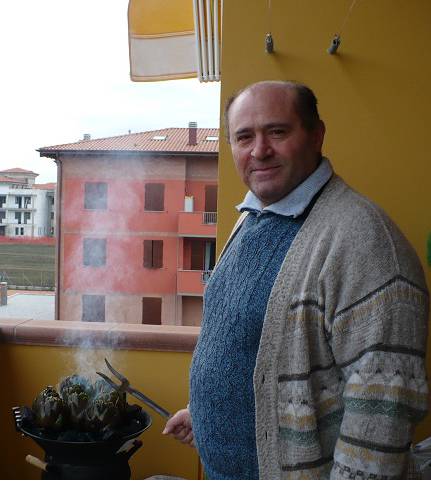
Alessandro
► Dinner with Alessandro and Antonia
Posted in Culture, Food, Travel | No Comments »